Colorado Calls Its Preschool Program Universal. The Supreme Court Hears Why Catholic Parishes Were Left Out November 3.
The Supreme Court hears St. Mary Catholic Parish v. Roy on November 3. Can a state open a funding program to faith based schools and still exclude some for what they teach? Members get the two questions, the fair point on each side, and where our sources disagree.
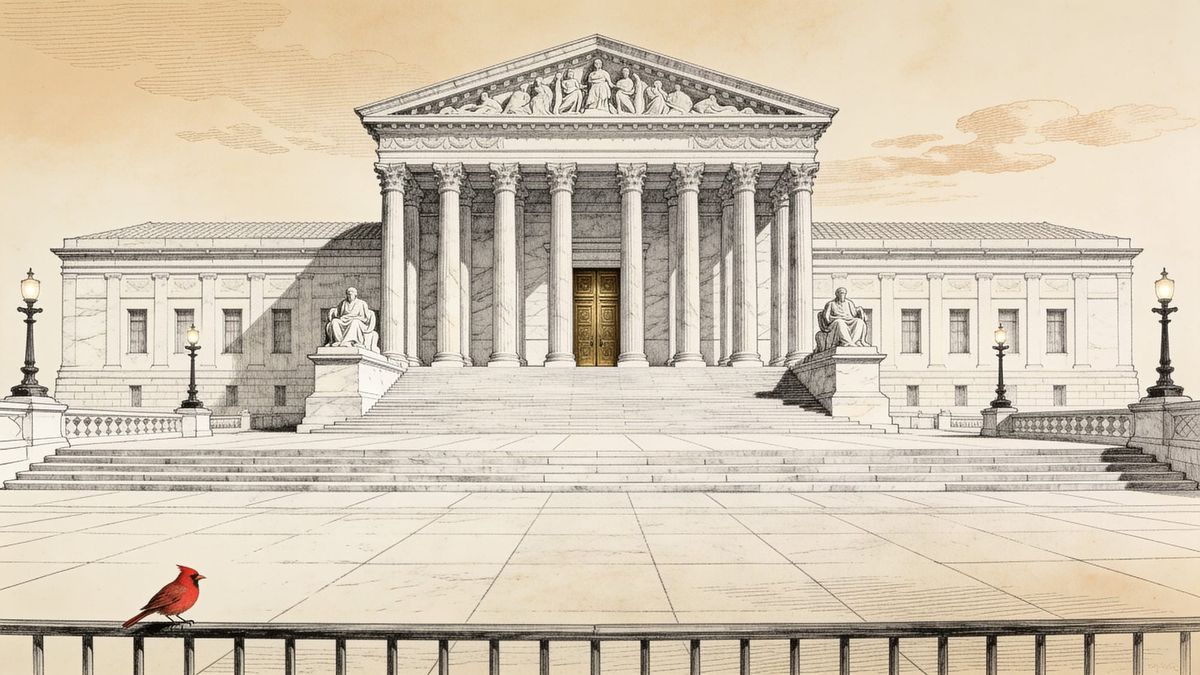
Begin with what the Court has not been asked. Nobody is asking whether Colorado must pay for Catholic preschools. The question is narrower and harder: when a state opens a funding program to churches and everyone else, can it keep one set of churches out because of what they teach?
On November 3 the Supreme Court hears St. Mary Catholic Parish v. Roy, No. 25-581. The justices granted review on April 20, 2026, and the case comes up from the Tenth Circuit, according to the SCOTUSblog docket. At issue is Colorado's universal preschool program, which gives parents up to about $6,000 per child to spend at the preschool they choose, faith based schools included, as the Catholic Review and National Catholic Reporter describe it.
Two Catholic parishes in the Archdiocese of Denver, St. Bernadette in Lakewood and St. Mary in Littleton, were left out. The state's rule bars a participating school from refusing admission to a child because of the sexual orientation or gender identity of the child or the child's family. The parishes say their preschools ask families "to be supportive of the Catholic faith," and that they are being shut out of a public benefit because they are Catholic. Colorado answers that the parishes want public money while turning away children because of who their parents are.
So the Court has to decide which description of this exclusion is the true one. The answer will turn on two questions the justices wrote down themselves, and on a rule about generally applicable laws that most Americans have never had reason to read.
Here are the two questions, in plain terms, as SCOTUSblog summarizes them. First: when a religious challenger argues that a law is not generally applicable, which is what unlocks tougher review under Employment Division v. Smith, must the challenger show that officials have unfettered discretion to grant exemptions, or categorical exemptions for identical secular conduct? Second: does Carson v. Makin, the Court's 2022 tuition aid decision, limit Smith only when a government expressly excludes religious people and institutions?
Translate that. Under Smith, a neutral law that applies to everyone can generally be enforced against a believer without a special justification. The parishes need to show that Colorado's rule is not that kind of law, or that a funding program changes the analysis. Colorado's filing, as the Catholic Review quotes it, says the parishes seek an exemption. The parishes' side, as the Becket case page presents it, says Colorado treated other preschools differently. I could not confirm that second claim against a second source, so treat it as an allegation until the record says otherwise.
Grant Colorado its strongest point. A state that pays for a child's seat has an interest in who is allowed to sit in it, and a rule against turning children away because of their parents was not invented to target Catholics. Now grant the parishes theirs. Carson held that a state cannot shut schools out of a tuition program because they are religious, and a program that tells every family it may choose cannot quietly mean every family except these.
The accounts also differ on the facts, and the differences matter. The Catholic Review and National Catholic Reporter describe two parishes and an admission rule. The Becket page describes more than thirty Archdiocese preschools, a dispute over policies on pronouns, dress and bathrooms, more than 1,500 children affected, and a benefit near $6,300 for fifteen hours a week. Those figures are not reconciled here. The record before the Court is what counts, and neither summary is that record.
Now the move this newsroom keeps making. The liberty the parishes ask for has to shield the person they disagree with, or it shields no one. If the argument wins for a Catholic preschool, it covers a Muslim school, a Jewish school, and a school whose beliefs you find strange. If it loses, the same reasoning can reach whichever church the next state dislikes. The sentence worth repeating at dinner: a state may set conditions on its money, but it has to explain why the condition lands on a church and not on everyone.
Here is what you can do before November 3. Read the questions presented on the SCOTUSblog docket rather than the headlines after the argument. Listen for which word the justices keep reaching for, exemption or exclusion, because the case lives in that choice. And ask your own congregation what rule it would want if it were the smallest church in the state.
We will cover the argument the day it happens. If slow, careful reading of cases like this one is useful to you, membership is how it keeps coming.
Sources
- SCOTUSblog, St. Mary Catholic Parish v. Roy (25-581) docket
- National Catholic Reporter, Supreme Court sets date for case over Catholic preschools and Colorado's universal program
- Catholic Review, Supreme Court sets date for case over Catholic preschools and Colorado's universal program
- Becket, St. Mary Catholic Parish v. Roy (advocacy source, flagged where it differs)
Comments ()