A Christian University Denied a Nursing Student's Religious Exemption. Iowa's Justices Agreed He Did Not Hold One.
Iowa's Supreme Court ruled on October 23 that a former Dordt nursing student did not hold a sincere religious objection to a vaccine. Courts may not judge whether a faith is true, the justices said. They may decide whether it is yours.
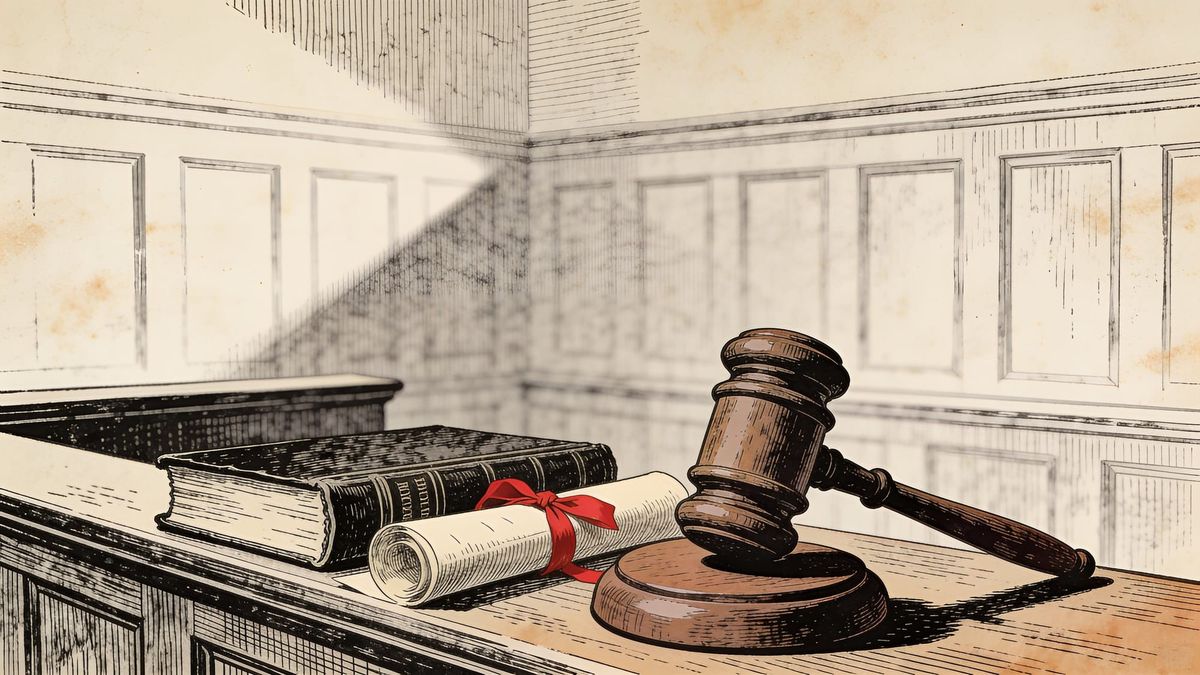
Strip the case to its principle and it is not complicated. A court may never ask whether your faith is true. It may sometimes ask whether it is yours.
On Friday, October 23, the Iowa Supreme Court answered that second question about a former nursing student named Andrew Perry, and the answer was no.
Perry had asked Dordt University, a Christian school in Sioux County, for a religious exemption from a COVID-19 vaccine requirement in 2021. Dordt said no. He sued under the Iowa Civil Rights Act, claiming religious discrimination. He lost at trial, and on Friday every justice on the state's highest court agreed that he had lost fairly.
The reason is the part worth reading slowly, because it cuts in more than one direction.
What happened
The facts here come from the court's opinion in Perry v. Dordt University, No. 25-1608, and from Radio Iowa's report the same day.
Dordt's clinical partner, Avera Health, required the vaccine for students working in its facilities. In October 2021 Dordt told its nursing students that all of its clinical sites would require it, and that it could not give them a full nursing education without clinicals.
On November 14, 2021, Perry emailed a request for a religious exemption. He wrote that his body is a temple of God, that he must be a steward of it, and that knowingly putting something into it that held only risk would violate his beliefs.
On December 2, Dordt denied the request because he had not submitted two documents its process asked for: a published statement from his denomination opposing vaccination, and proof of a religious exemption from his school years. Perry left Dordt in the spring of 2022 and enrolled at Palm Beach Atlantic University.
What the trial court found
After a bench trial, the district court in Sioux County dismissed his claim. It found that Perry did not hold a sincere religious objection to the vaccine. It found that the real objection belonged to his parents, especially his mother, who opposed the vaccine and, the court found, threatened to cut off his financial support if he took it. Perry was financially dependent on them. He had said he would take the vaccine if his mother approved.
The trial court put it this way, and the Supreme Court quoted it: "If it were truly his decision, he would not have to think about it."
What the Supreme Court held
Justice May wrote for a unanimous court. The holding rests on one distinction, and the opinion states both halves of it.
The first half protects every believer: "Courts may not question the validity of religious principles." A judge cannot rule that your reading of Scripture is wrong, unreasonable or out of step with your own church.
The second half is the one that decided this case. Courts may, the opinion says, and sometimes must, "decide what someone actually believes." Sincerity, the court said, "is essentially a credibility determination," and an appeals court must respect a trial judge's credibility findings when the evidence supports them.
Perry argued that the trial court had judged his piety, including evidence that he vaped and drank. The justices disagreed. They said a court may consider a person's words and deeds as part of the whole picture, but may not treat religious observance as a test, and that the finding here "was based on facts relating to Andrew's credibility, not his performance or observance."
Because the sincerity finding settled the case, the court did not decide whether Dordt's documentation rules were themselves discriminatory. That question is still open.
The turn
There is a version of this story built for a culture war, and it does not fit. The institution defending itself against a religious liberty claim was a Christian university. The student claiming the liberty lost because a court found the conviction was not his.
Concede the fair worry first. A sincerity inquiry can be dangerous. A judge who doubts a believer's sincerity because she sins, or because her church does not share her conviction, is one short step from ruling on doctrine. Many sincere Christians drink. Plenty of real convictions have no denominational paper behind them.
But the alternative is worse. If no court may ever ask whether a claim is sincere, every exemption becomes a password, and the people who pay for that are the believers whose consciences are real. Exemptions survive in law because they are rare and honest. The liberty I claim for my conscience must leave room for a court to ask whether it is mine, or it will not last long enough to shield anyone.
Notice what the court refused to do. It did not weigh the Bible verse. It did not ask whether the vaccine was wise. It asked whose objection this was, and it drew the answer from the record.
What you can do
If your church or school writes an exemption policy, read the open question this case left behind. A rule that demands a denominational statement may turn away a believer whose conviction is real and whose church never wrote one down. Ask your leaders whether your policy asks for a person's conviction or a document's permission.
And if you ever need to claim an exemption yourself, know what the court will look for: your words, your deeds, and whether the conviction is yours.
Sources
- Iowa Supreme Court, Perry v. Dordt University, No. 25-1608, opinion filed October 23, 2026: iowacourts.gov
- Radio Iowa, "Iowa Supreme Court rules in Dordt College student COVID vaccine case," October 23, 2026: radioiowa.com

Comments ()