
A Judge Gave Galveston Ten Days to Hang the Ten Commandments in Every Classroom. The District Said Yes.
A Galveston County judge ordered the district on October 1 to post Ten Commandments posters within ten days, and the district said it will comply. The order follows a Fifth Circuit decision that treated a 1980 precedent as obsolete. The principle at stake is older than the posters.
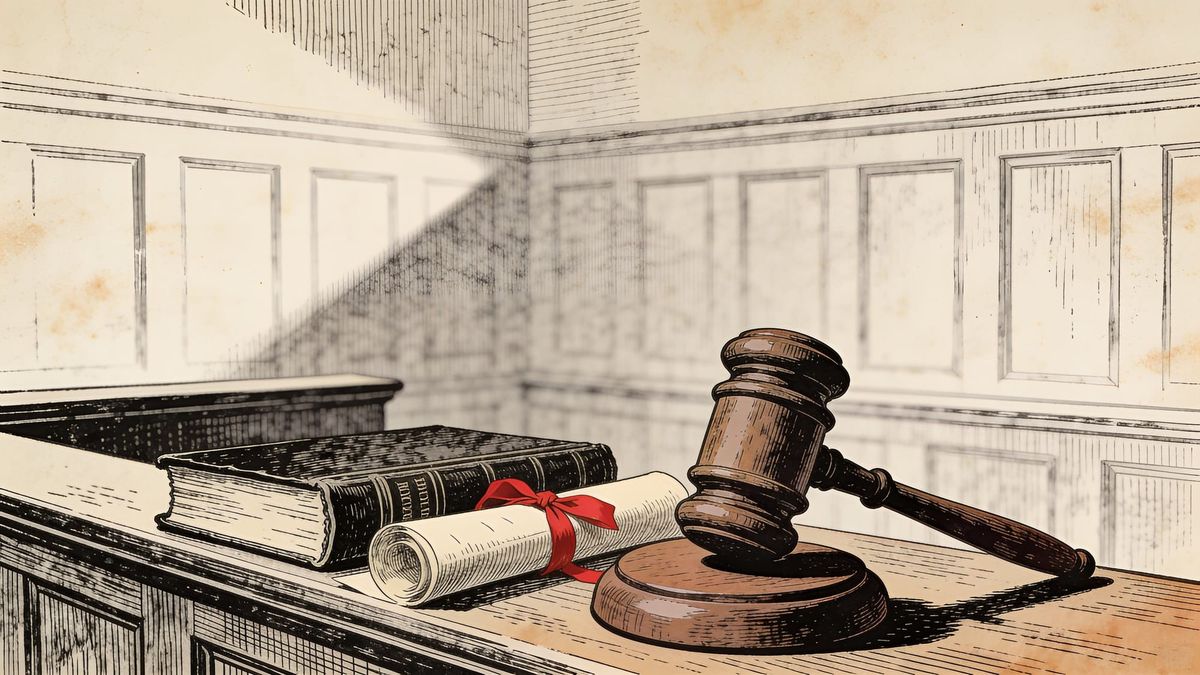
Strip the Galveston case to its principle and it is not complicated. A court told a public school district to hang a religious text in every classroom, and the district said it would.
On Thursday, October 1, Judge Jeth Jones of the 122nd District Court in Galveston County ordered Galveston Independent School District to display Ten Commandments posters in its classrooms within ten days. The Galveston Daily News reports about 500 posters, donated by State Senator Mayes Middleton. It also reports that the judge rejected three motions from the district, including a request to wait for a U.S. Supreme Court decision in a similar case.
The district did not fight on. Its board president told the paper, "We will accept the court's decision." So the question is not whether the posters go up. It is why a judge could order them, and whether the First Amendment still has anything to say about it.
Begin with what the law is. Texas Senate Bill 10, signed in June 2025, requires a Ten Commandments display in every public school classroom. Attorney General Ken Paxton sued Galveston ISD in November 2025 after the district delayed complying, KERA and the Galveston Daily News report. A lawyer for the Attorney General's office told the court, in KERA's account, that the law is the law of the land.
Now the part that explains the judge. In April, the full U.S. Court of Appeals for the Fifth Circuit upheld SB 10 in Nathan v. Alamo Heights ISD, according to the National Constitution Center. The majority reasoned that Kennedy v. Bremerton (2022) replaced the old Lemon test with a look at history and tradition, and that without Lemon there was nothing left of Stone v. Graham, the 1980 decision that struck down a classroom posting law. The dissenters answered that only the Supreme Court can overturn its own precedents. The ACLU of Texas has said it will appeal. So a state trial judge did what a binding appeals court decision tells a trial judge to do.
Concede the fair point first. A history and tradition test is not an invention of Texas. It is the method the Supreme Court adopted in Kennedy, and a judge who follows it is not lawless. The Ten Commandments are woven through American legal and moral memory, and a parent who wants a school to acknowledge that has an argument worth hearing.
Now press. The plaintiffs in the Fifth Circuit case are multifaith Texas families. The Jewish Telegraphic Agency quotes one of the lead rabbis saying the documents are religious and do not belong in a secular school space. A trustee on the Galveston board told KERA that the display advocates one religion over all others. You do not have to agree with either to see the structure of the objection. A classroom is a place the state compels children to sit. What hangs on its wall speaks in the state's voice.
Here is the pluralist test, and it is the one that matters. The liberty you claim for your text must shield the stranger's text, or it shields no one. If Texas may require one scripture on every classroom wall because history supports it, ask what the same reasoning allows a different majority to require in a different state. A Christian who cheers this ruling should be able to say, out loud, why he would accept the mirror image.
What is settled and what is not. Settled: the order, the ten day deadline, and the district's decision to comply. The superintendent told the Daily News the posters would be hung by October 12. Not settled: whether the Supreme Court takes the Fifth Circuit's decision, and whether it restores or retires Stone. The Galveston Daily News reports a bench trial on June 14, 2027, though an earlier summary of the ruling gave a different date, so treat the date as reported, not confirmed. The district also paid a $25,000 insurance deductible on legal fees, with donations covering most or all of the cost, the paper reports.
What you can do. Read SB 10 itself, not the posts about it. Ask your own school board how it plans to comply and who is paying. And decide, before the next case reaches you, which side of the mirror you would defend.
One sentence to carry out the door: a freedom that only works for your side is a favor, and favors can be withdrawn.
Sources
- Galveston Daily News: District judge orders Galveston ISD to display Ten Commandments posters (October 1, 2026)
- KERA: Galveston ISD ordered to display Ten Commandments posters in classrooms following Paxton lawsuit (October 1, 2026)
- Jewish Telegraphic Agency: Texas wins case forcing Galveston school district to display Ten Commandments posters in classrooms (October 4, 2026)
- National Constitution Center: Supreme Court showdown over Ten Commandments likely after federal court decision



Comments ()