A Home Prayer Case Reaches the Supreme Court December 9. The Man Who Brought It Has Moved Away.
Daniel Grand was sent a cease and desist letter over a dozen people praying in his home. The Court hears his case December 9, after he told it he has moved out of the city. The question is whether he could sue at all.
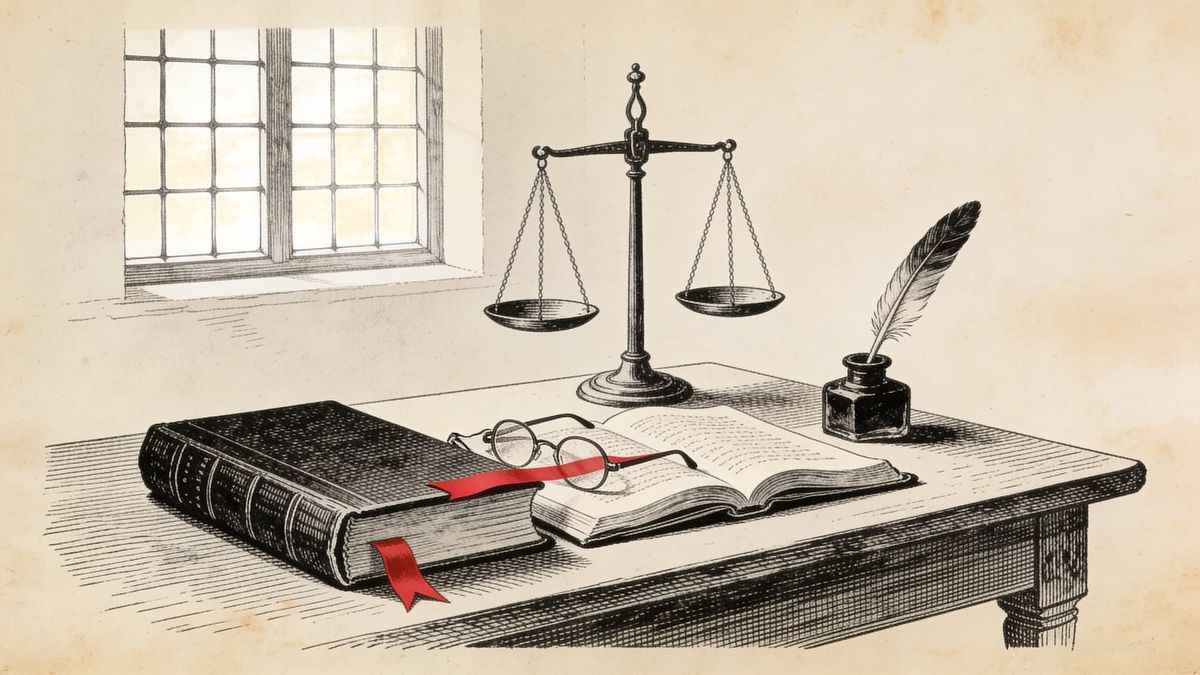
Strip the case to its principle and it is not complicated. A man invited about a dozen people to pray in his living room, and his city sent him a cease and desist letter.
Daniel Grand is an Orthodox Jew in University Heights, Ohio, a Cleveland suburb. The Supreme Court will hear his case on December 9. In September, he told the Court he has moved out of the city.
The justices did not take the case to decide whether a man may pray with friends at home. The question in front of them is narrower and stranger: whether he was allowed to ask a federal court that question in the first place.
The principle first
Start with the First Amendment, which protects the free exercise of religion and the right to assemble. Nobody in this case argues otherwise. The fight is over timing. When a city threatens a person for a religious gathering, does that person have to finish the city's own permit process before a federal judge will listen?
Two doctrines collide here. The first is the land use finality rule, drawn from Williamson County Planning v. Hamilton Bank, which says property owners generally must get a final decision from local officials before they sue in federal court. The second is the chilling effect doctrine, which treats a credible government threat that deters protected conduct as an injury in itself. SCOTUSblog states the question presented as whether the second is displaced by the first.
What happened
In January 2021, Grand invited about a dozen neighbors to Sabbath prayers at his home, according to the Algemeiner. Two days after the mayor forwarded the invitation to the city's law director, the city sent a cease and desist letter. It said Grand appeared to be planning a place of religious assembly and warned of citations for operating a synagogue without zoning approval. Grand cancelled the next gathering and applied for a special use permit.
At the public hearing, neighbors raised concerns about attendance, parking and fire safety. Before the Planning Commission decided anything, Grand withdrew his application. His position is that a home prayer group is not a house of worship under the city code. He sued in 2022. A federal trial court ruled some of his claims premature because no final zoning decision existed, and the Sixth Circuit upheld that in November 2025. The Supreme Court agreed to hear the case on June 30, 2026.
The fair point
The city has an argument worth stating plainly. It says no body with final authority ever prohibited the prayer group. The local process could have concluded that no permit was needed, or approved the use with reasonable safety conditions. Grand cut that process short. Cities do regulate parking and fire exits, and a rule that every zoning threat can be taken straight to federal court would have costs of its own. The American Planning Association and the Local Government Legal Center filed briefs supporting neither side.
Grand's lawyers answer that the letter, the warnings of citations, the encouragement to neighbors to report him and the police drive bys were the harm. The gathering stopped. In their telling, waiting for a final decision after the prayer has already been silenced is the injury, not the cure. Alliance Defending Freedom's John Bursch says the city's approach shows a trend of "weaponizing zoning laws against people of faith."
The turn nobody expected
On September 18, Grand filed a letter telling the Court he had moved out of University Heights. The city filed its own letter on September 21 and Grand answered on September 23. The docket lists those letters by title only, so we cannot say what either side argued. What the docket does show is that on September 29 the Court amended the briefing schedule: the city's main brief is now due October 23, and the city may file a sur-reply on December 2 limited to the effect, if any, of Grand's move.
That is the part to watch. Whether a plaintiff who no longer lives in the city can still press this claim is now a live question in the briefing. We do not know how the Court will treat it, and we are not predicting.
Who else is in the room
The list of friends of the Court is long. The docket shows briefs from the United States, Members of Congress, a group of states led by Kentucky, the Becket Fund and the Institute for Justice. The Solicitor General also asked to take part in the oral argument and to divide the time. The docket shows no ruling on that request through September 29. The U.S. Conference of Catholic Bishops filed in the appeals court arguing that religious plaintiffs may sue as soon as a credible threat arises.
Notice who is sharing a side. Catholic bishops are backing an Orthodox Jew's living room. That is the pluralist move in practice: the rule that protects a minyan in Ohio is the rule that protects a Bible study in a Texas garage and a Friday prayer circle in a Michigan basement. If the liberty covers only the neighbor I like, it covers no one.
A city may regulate parking. It may not make a prayer wait in line for permission to be a prayer.
What you can do
Read your own town's zoning code and find the phrase "place of assembly." Ask your pastor or your rabbi whether a small group at a home would count. Then watch the October 23 brief and the December 9 argument.
If this kind of case walk through is useful, forward it to one friend who would rather understand the argument than just react to it.
Sources
- SCOTUSblog, Grand v. City of University Heights (25-965): https://www.scotusblog.com/cases/grand-v-city-of-university-heights/
- Supreme Court of the United States, docket for No. 25-965: https://www.supremecourt.gov/search.aspx?filename=/docket/docketfiles/html/public/25-965.html
- EWTN News, Supreme Court Will Hear Catholic Backed Religious Liberty Suit Involving Ohio Jewish Prayer: https://www.ewtnnews.com/world/us/supreme-court-will-hear-catholic-backed-religious-liberty-suit-involving-ohio-jewish-prayer
- Algemeiner, Supreme Court to Hear Case Over Orthodox Jewish Prayer Gatherings in a Private Home: https://algemeiner.com/2026/07/15/supreme-court-to-hear-case-over-orthodox-jewish-prayer-gatherings-in-a-private-home

Comments ()