Marlboro Turned Down a Mosque After Nearly Five Years. Its Mayor Says the Township Is Ready to Litigate.
Marlboro Township, New Jersey, denied a mosque on June 23 after a nearly five year application. A federal complaint followed on September 28, and the mayor says the township is prepared to litigate. Here is what the law asks of a town.
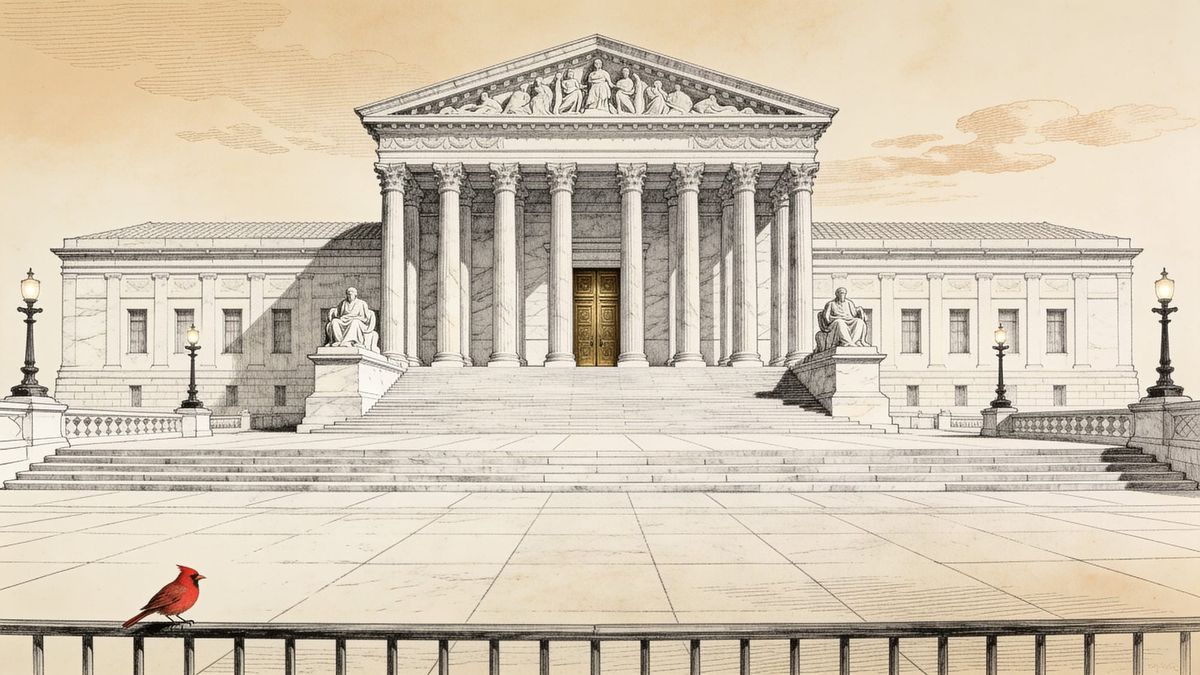
Strip the case to its principle and it is not complicated. A town may decide where buildings go. It may not decide whose prayers get one.
In Marlboro Township, New Jersey, a Muslim congregation spent nearly five years trying to build the town's first mosque. The zoning board denied the application on June 23. On Monday, September 28, a resident named Tahir filed a 103 page complaint in federal court, according to NJ.com.
The township's mayor, Jon Hornik, said the council agrees with the board that the site is not appropriate for a mosque and is "prepared to litigate."
The complaint says Marlboro held this application to rules it did not apply to others. The township says the site was wrong. A federal judge will have to decide which of those is a fact.
Begin with what is established. Marlboro Township is in Monmouth County. The congregation, which Religion News Service calls the Muslim Center of New Jersey, is about 300 people who have worshipped in a former firehouse since January 2024. The proposed building was a 13,000 square foot community center on a five acre lot on Tennent Road. The two reports differ on when the lot was bought, 2020 in one and 2021 in the other, and on how to spell the plaintiff's first name. The substance does not turn on either.
Now the claims, which are claims. The complaint alleges delays, last minute cancellations and unequal treatment, and land use restrictions that were not placed on other religious or secular applicants. Attorneys at the Asian American Legal Defense and Education Fund, who represent the plaintiff with a New York firm, say board members gave in to anti-Muslim political pressure, and that some council members campaigned on stopping the mosque. Residents told reporters the nearest mosque is twenty minutes away, in Old Bridge. A township official told RNS it had not yet received the lawsuit. The mayor's June letter to residents gave "planning principles and community needs" as the reason, and condemned hate speech around the hearings.
Here is the law that governs fights like this one. Congress passed the Religious Land Use and Institutionalized Persons Act on September 22, 2000. Under it, a government may not impose a land use rule that substantially burdens religious exercise unless it shows a compelling interest and the least restrictive means of serving it. It may not treat a religious assembly on less than equal terms with a secular one. It may not discriminate on the basis of religion. And it may not exclude religious assemblies or unreasonably limit them. We have not seen the Marlboro complaint's counts, so we cannot tell you which of these it pleads.
Concede what is fair. Towns regulate traffic, parking, septic systems and the size of buildings, and they do it to churches, synagogues and mosques alike. Nothing in the First Amendment excuses a mosque from the review a church would face. A denial is not a violation merely because the applicant is Muslim, and the board's findings have not been tested in court.
Now press. The reporting describes a pattern. Last November a federal suit was filed against Sayreville, New Jersey, after its planning board denied a mosque. That complaint says the applicants were asked for a vibration study, for police traffic control at Friday night services, and to explain their carpet designs. Those are allegations, and Sayreville is a separate case. But they show what an equal terms claim looks like: a list of questions that a church applicant was never asked.
That is the test. Zoning law lets a town ask how big, how loud and how many parking spaces, and it does not let a town ask whose God, and the First Amendment does not excuse a mosque from the same septic review as a church.
Here is why a Christian reader should care, and care first. The liberty a congregation claims for itself is only as sturdy as the liberty it will defend for the congregation it disagrees with. The next application to be slow walked may be a storefront church in a town that likes its zoning quiet. The same statute shields both.
What you can do is unglamorous. Read your own township's minutes. Learn how its board treated the last three applications from houses of worship, whichever faith applied. If the answers differ, ask why, in public, at the meeting.
The township says it will litigate. So will the plaintiff. Watch for the first answer to the complaint.
Sources
- Religion News Service: New Jersey Muslims sue township for mosque denial, alleging discrimination (September 29)
- NJ.com via Yahoo News: N.J. town faces federal lawsuit over denied mosque (September 29)
- 42 U.S.C. 2000cc, Religious Land Use and Institutionalized Persons Act (Cornell Legal Information Institute)

Comments ()