
Everyone Will Call the Eighty One Religious Plaintiffs Suing Over Immigration the Religious Left. Read Paragraph Nine of the Mennonite Complaint. It Cites Hobby Lobby, and What You Do With That Is the Test of Whether You Ever Believed in RFRA.
Religion News Service counts eighty one religious plaintiffs in the immigration lawsuits, most pleading RFRA. Paragraph nine of the Mennonite Church USA complaint cites Hobby Lobby. The Advocate reads it and asks both sides the same question.
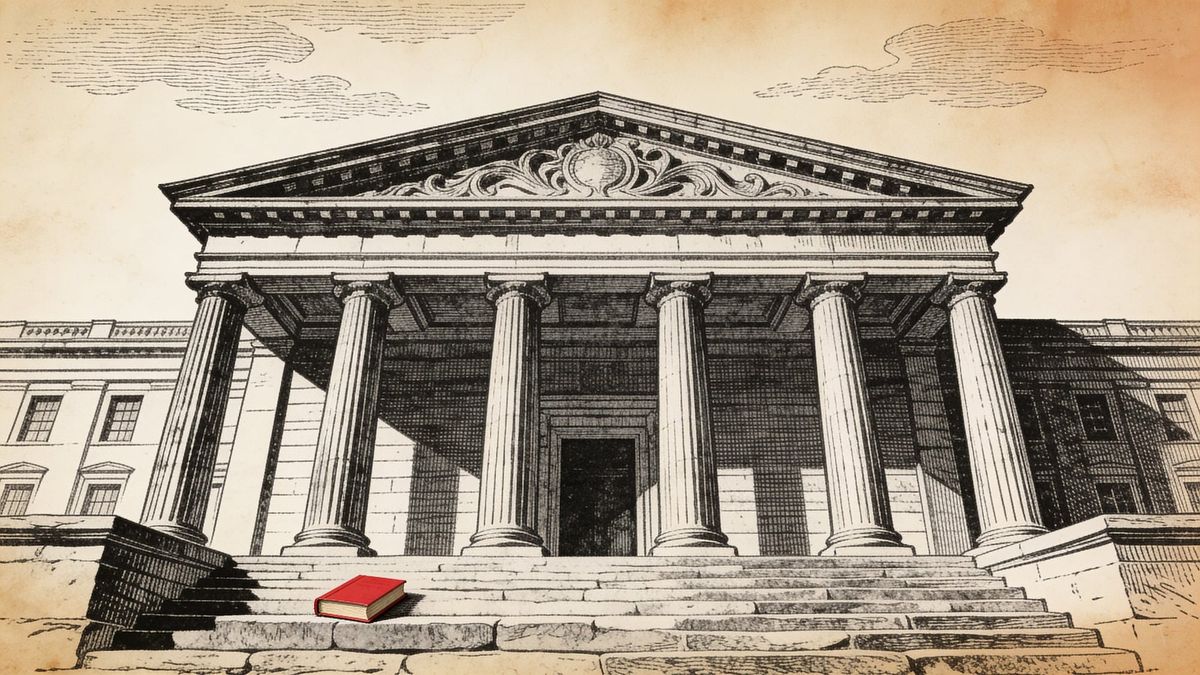
Strip the statute to its sentence and it is not complicated. The federal government "shall not substantially burden a person's exercise of religion even if the burden results from a rule of general applicability," unless it can show the burden is the least restrictive means of serving a compelling interest. That is the Religious Freedom Restoration Act of 1993, 42 U.S.C. 2000bb-1. Congress passed it with both parties after Employment Division v. Smith (1990) told religious claimants that the Free Exercise Clause would no longer excuse them from neutral laws. For a decade the sentence was most famous for a craft store.
On Wednesday, Religion News Service published what it found in a tracker it built with the Law, Rights, and Religion Project at Union Theological Seminary. Twenty two federal lawsuits challenge the Trump administration's immigration policies. Religious plaintiffs appear in at least twenty one of them: eighty one in all, from eight traditions, including fifteen whole denominations and twenty three regional bodies. (RNS's summary line says eighty and eleven traditions; its body and chart say eighty one and eight. We use the body.) At least fourteen of the twenty two cases plead a violation of religious rights, and most of those plead RFRA.
One of them is Mennonite Church USA v. Department of Homeland Security, filed in federal court in Washington on February 11, 2025 by twenty seven plaintiffs, among them the Episcopal Church, the Presbyterian Church (U.S.A.), the Union for Reform Judaism and the Unitarian Universalist Association. Paragraph nine of their complaint states the RFRA standard. The case it cites for that standard is Burwell v. Hobby Lobby Stores, 573 U.S. 682.
There is a version of this story built for outrage. The court record tells a more interesting one.
The complaint does not ask a court to declare immigration enforcement unlawful. It challenges one act: the Department of Homeland Security's January 2025 rescission of the "sensitive locations" policy that for decades had restricted arrests at churches, schools and hospitals without prior approval or exigent circumstances. Paragraph eight lays out the burden the plaintiffs claim: attendance is falling, and congregations must choose between exposing the vulnerable or posting guards, a choice the complaint calls "in direct tension with their religious duties of welcome and hospitality." Then paragraph nine applies the test, quoting Hobby Lobby quoting the statute.
Concede the fair points. Immigration enforcement is a compelling governmental interest; no serious lawyer disputes it. The sensitive locations rule was an internal memo, not a right, and an agency may change its mind. A substantial burden is a real threshold, and a general fear that agents might come is a harder claim than a specific agent who did. RNS reports that more than a quarter of the twenty two cases have already been dismissed or sit on appeal. At least two of the four sensitive locations suits have won temporary injunctions. The rest have not.
Now press. The plaintiffs' argument stands or falls on ground conservatives spent fifteen years clearing. Hobby Lobby held in 2014 that RFRA exempted a closely held company from the contraceptive mandate because its owners objected on religious grounds: the burden was real, and the government had other ways to reach its goal. Liberal faith groups seldom brought high profile RFRA claims before this term, Caroline Mala Corbin of the University of Miami told RNS. Now the Episcopal Church is pleading the craft store's case, and Corbin put the logic plainly: if the protection is this broad, there is no reason only the devout on one side should benefit.
That is the counterintuitive turn, and here is the sentence to carry to dinner: a religious liberty statute that reliably protects only the religion you would have voted for is not a religious liberty statute, it is a party platform with a chaplain.
The pluralist move runs both ways. Readers who cheered Hobby Lobby and now wince at a Quaker meeting invoking it should ask which part of the sentence they meant. Readers who called Hobby Lobby a license to discriminate and now cheer the Episcopal Church's RFRA claim owe the same audit. The statute does not know the difference, and that is the point of having one. Elizabeth Platt, who directs the Union project, told RNS that Alliance Defending Freedom and the other conservative firms that usually carry RFRA cases are absent from this docket; Democracy Forward is present instead. The clients changed. The text did not.
What the courts do next is the open question, and Corbin framed it: will the justices be as deferential to religious liberty claims from the left as they have been to claims from the right? A White House spokeswoman, Lauren Bis, told RNS the president "is right" that he has done more for religion than any predecessor. Twenty seven religious bodies filed an eighty page complaint saying otherwise, and they filed it under the statute his coalition has spent a generation defending.
Read paragraph nine; it is one paragraph and it is public on CourtListener. Then find the RFRA case you cheered, whichever side it was on, and read its holding next to it. If the test is the same, say so out loud, at church, to someone who will not enjoy hearing it. The liberty you claim must shield the neighbor you disagree with, or it shields no one, and one day the neighbor will be you.
Sources
- Religion News Service, Jack Jenkins, "RNS tracked the religious lawsuits against Trump's immigration policies. Here's what we found," September 16, 2026: religionnews.com
- Religion News Service, "Religion & Immigration Litigation Tracker," August 27, 2026: religionnews.com
- Mennonite Church USA et al. v. U.S. Department of Homeland Security et al., No. 1:25-cv-00403 (D.D.C.), Complaint, filed February 11, 2025: CourtListener (PDF)
- Religious Freedom Restoration Act, 42 U.S.C. 2000bb-1, as quoted at paragraph 9 of the complaint via Burwell v. Hobby Lobby Stores, 573 U.S. 682 (2014)


Comments ()