Eight Firefighters Asked the Supreme Court What Undue Hardship Means. The Court Declined to Say.
The Supreme Court turned away eight Snohomish County firefighters who were denied religious accommodations. Their petition asked whether an employer's honest fear of hardship is enough to say no. The question is still open, and it will be back.
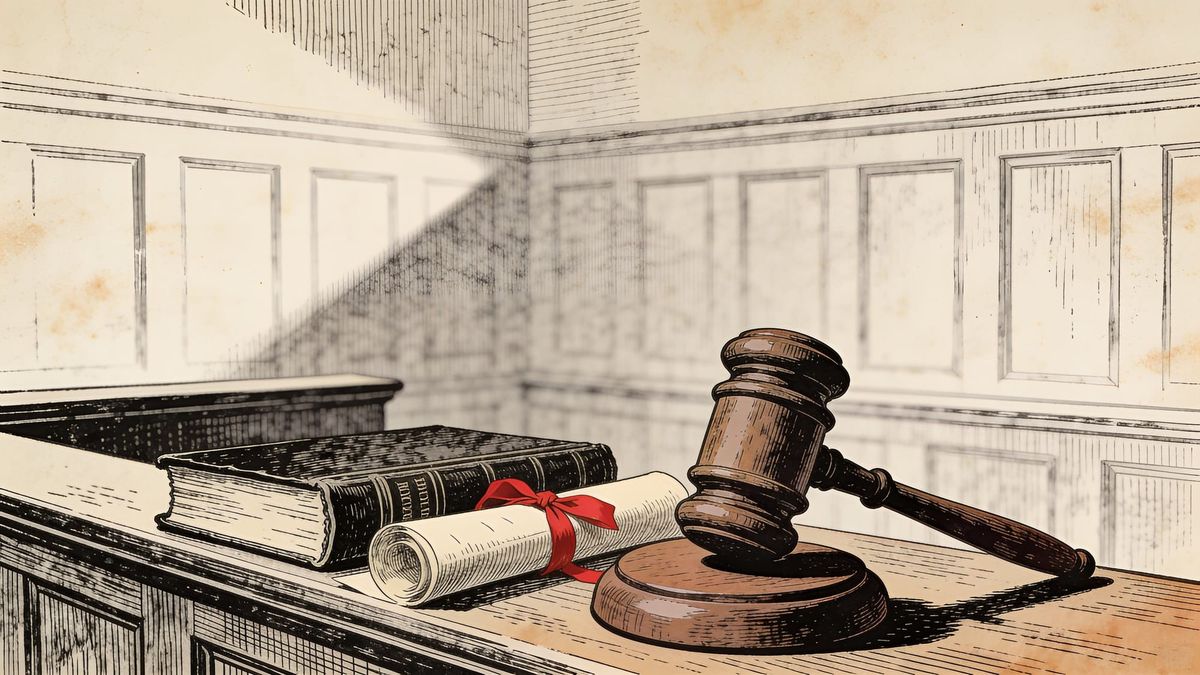
Strip the case to its question and it is not complicated. When a worker asks for a religious accommodation and the employer says no because of the harm it would cause, does the employer have to show that the harm is real? Or is an honest fear of harm enough?
Eight firefighters in Snohomish County, Washington, spent nearly four years asking courts that question. On Monday, October 5, the Supreme Court declined to answer it.
The order in Petersen v. Snohomish Regional Fire and Rescue was one line on the first order list of the term. No justice noted a dissent. No one wrote a statement. The Ninth Circuit's ruling against the firefighters stands.
A denial is not a ruling on the merits. It is not nothing, either.
What happened
In 2021 Washington required healthcare workers to be vaccinated against COVID-19. The eight firefighters asked for religious accommodations. Snohomish Regional Fire and Rescue said it could not grant them without undue hardship, pointing to health risks, potential liability and lost contracts. Under an agreement it negotiated with the firefighters' union, the eight went on unpaid leave for eight months.
They sued in federal court in Seattle in November 2022, seeking back pay, vacation days and lost benefits. A district judge ruled for the department in January 2024. The Ninth Circuit affirmed, finding that the department "provided unrebutted medical evidence that showed the inadequacy of the firefighters' proposed accommodation." The firefighters had proposed continuing the precautions they used before the vaccine.
Many of them went back to work after the fire board voted in the spring of 2022 to let them return. The lead plaintiff, David Petersen, a seventeen year firefighter and EMT, still works there as a driver operator and acting lieutenant.
The question the Court left open
In 2023 the Supreme Court decided Groff v. DeJoy, the case of a postal worker who sought a Sabbath accommodation. It replaced a standard that had stood for fifty years and let employers dismiss accommodation requests easily, and it raised the bar an employer must clear before it can claim undue hardship.
The firefighters' petition asked the next question. Must the hardship be proven, or is a "good-faith but mistaken" fear of it enough? They argued the circuits have split: the First, Sixth and Ninth accept a reasonable concern of hardship, while the Third, Seventh and Eighth require proof. The department answered that the split was overblown and that the evidence the firefighters relied on was inadmissible.
Gonzaga law professor Dallan Flake told KUOW that because no justice dissented, the reason for declining is unclear, and he doubted the vaccine context was the reason. He also noted how rarely the Court takes these cases at all: four religious accommodation cases since Congress added the requirement to federal civil rights law in 1972.
The fair point, and the harder one
Concede what the department deserves. It was making decisions in October 2021, with incomplete information and a duty to the public it served. The Ninth Circuit said its medical evidence went unrebutted. An employer acting in good faith during a pandemic is not the villain of this story.
But the question does not belong to the pandemic. It will come back with a nurse who will not assist at a procedure, a teacher who will not work on a holy day, a Muslim officer who asks to keep a beard. If an honest fear is enough, an accommodation can be refused on an employer's worst guess. If proof is required, the burden sits where Groff seemed to put it.
A right that gives way to any sincere worry is a courtesy, not a right.
And the liberty a Christian firefighter claims here is the same liberty that protects the Sabbath keeper, the Sikh and the Orthodox Jew. It shields every one of them or it shields none of them.
What comes next
"Our case may be over, but our fight for religious liberty is not," Lauren Petersen, David's wife and a paralegal on the case, told The Everett Herald. Cliff Martin of First Liberty Institute, co-counsel, said, "We will fight until every employee has access to religious accommodations."
The split the firefighters described has not gone away. The next petition will come from a different workplace and a different faith. When it does, the Court will face the question it set aside on October 5.
If you want to understand these cases before they reach the dinner table argument, The Red Lighthouse walks through them every week. Forward this to someone who argues about this stuff. They will thank you.
Sources
- SCOTUSblog, "Court declines to hear cases on 'Let's Go Brandon' sweatshirts, felons' Second Amendment rights, COVID-19 vaccine mandates, and other notable issues," October 5, 2026: scotusblog.com
- The Everett Herald, "SCOTUS won't hear Snohomish Co. firefighters' vaccine lawsuit," October 5, 2026: heraldnet.com
- KUOW, "U.S. Supreme Court declines Snohomish firefighters' religious discrimination lawsuit," October 5, 2026: kuow.org
Comments ()