
A New York Judge Ordered an Orthodox Jew Out of Rabbinical Court. Justice Sotomayor Wants an Answer Monday.
A Westchester County judge has ordered Samuel Strulovitch to stop pursuing a business dispute before a beis din and to get his rabbis to withdraw a censure they issued. He has asked the Supreme Court for a stay, and Justice Sotomayor wants a response by 4 p.m. Monday.
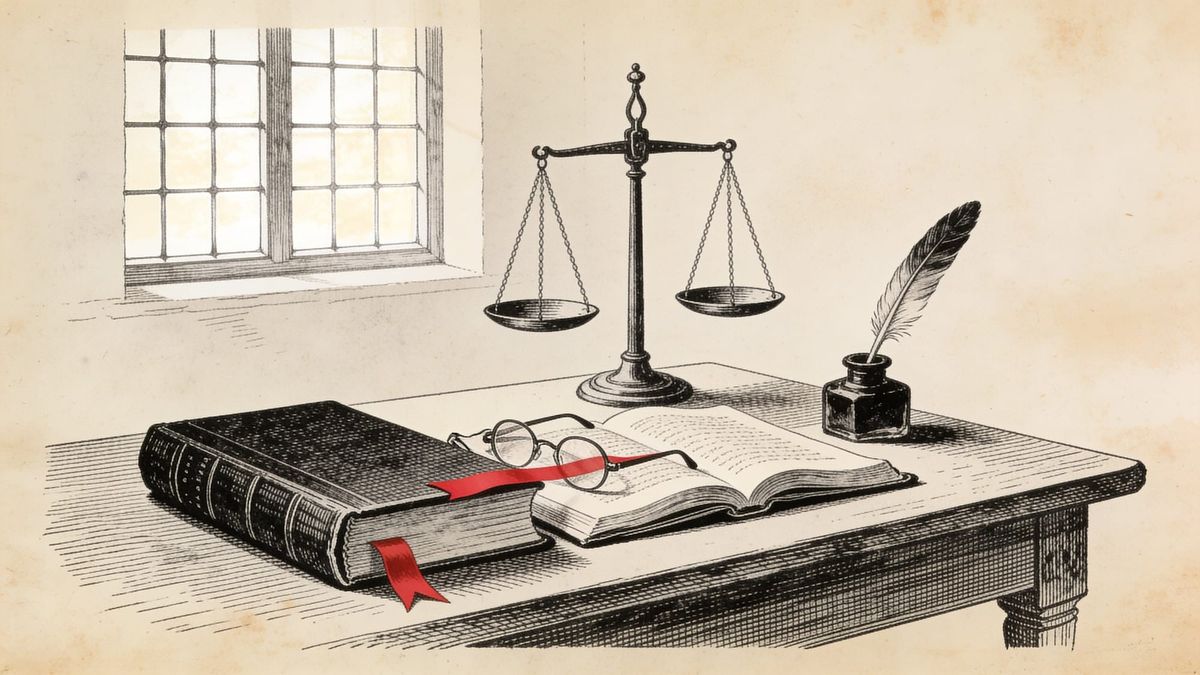
Strip the case to its principle and it is not complicated. A civil court may decline to enforce a religious court's judgment. It may not order a believer to stand before his own rabbis and tell them they were wrong.
That second thing is what a New York trial court has done, and the other side's answer is due at the Supreme Court at 4 p.m. on Monday.
The believer is Samuel Strulovitch, an Orthodox Jew. The fight began as an ordinary business dispute over a nursing home in Mount Vernon, New York. Strulovitch took it where his faith tells him disputes between Jews belong: a beis din, a rabbinical court. In April 2024 that court found he held a 22 percent interest.
A man named Moshe Bain, who also holds a stake in the business, was not a party to that proceeding. He sued in Westchester County. And Westchester did not stop at the award.
First, the terms. A beis din is a rabbinical court that hears disputes under Jewish law. Strulovitch's application cites the Shulchan Arukh, the classic code of Jewish law, for the rule that disputes between Jews belong before one. A seruv is a formal religious censure issued by a beis din.
Now the record, from Strulovitch's emergency application and the Supreme Court's docket. In December 2024 Justice Linda Jamieson of the Westchester County Supreme Court barred Strulovitch from confirming or enforcing the Rockland award. In February 2026 he took the dispute to a different beis din. On March 24 the court issued a temporary restraining order against proceedings "in any other forum, including any beis din." The rabbinical court then issued a seruv against Bain. In April the court entered the order now at issue: it bars Strulovitch from pursuing the dispute before a beis din, and it directs him to "take all steps necessary" to get the seruv and the proceeding withdrawn.
His appeal to the Appellate Division, Second Department, has sat undecided since May. On September 17 his lawyers, led by Michael McGinley of Dechert with Notre Dame Law School's Religious Liberty Clinic, asked Justice Sonia Sotomayor, the circuit justice for New York, for a stay. On September 23 she asked Bain to respond by 4 p.m. on September 28. On September 25 the Becket Fund filed a brief supporting Strulovitch.
Concede the fair point first, because it is a real one. Bain was never a party to the first beis din, and in June 2025 Justice Jamieson found that nobody there represented his interests. A second rabbinical court in Brooklyn had also restrained enforcement of the Rockland award, so the civil court was looking at rabbinical rulings pointing in different directions. A man who never agreed to arbitrate should not be bound by an arbitration. The application itself accepts that the court could simply refuse to enforce any beis din award against him.
That is where the case turns. Refusing to enforce is one thing. Forbidding a man to bring his dispute to his own religious tribunal, and ordering him to lobby his rabbis to retract a censure he agrees with, is another. The first protects Bain. The second governs Strulovitch's religious life.
The legal ground is old. In Watson v. Jones (1872) the Court warned that civil review of religious judgments would lead to "the total subversion of such religious bodies." Kedroff (1952) and Serbian Eastern Orthodox Diocese v. Milivojevich (1976) held that civil courts may not second-guess religious bodies on matters of faith, discipline and internal governance. Strulovitch's application adds two newer arguments. An order written for one man's religious practice is not a neutral, generally applicable law under Employment Division v. Smith, so it faces strict scrutiny. And making a man speak against his own convictions is compelled speech.
A court may refuse to honor a religious judgment. It may not make a believer recant one.
Christian readers have a direct stake here. Paul told the Corinthians to settle disputes among believers inside the church rather than before unbelieving judges (1 Corinthians 6:1 to 6), and many Christians still try to. The liberty that protects a Christian who takes a quarrel to his elders is the same liberty that protects an Orthodox Jew who takes his to a beis din. If it does not shield Strulovitch, it shields no one.
What happens next is narrow. Justice Sotomayor can act alone or refer the application to the full Court. A stay would not decide who owns the nursing home. It would only pause the parts of the order that keep Strulovitch out of the beis din and require him to seek withdrawal of the seruv while his New York appeal goes on.
The docket number is 26A382. The answer is due Monday. We will tell you what the Court does with it. If this is the kind of case you want read closely rather than shouted about, send it to someone who argues about religious liberty at dinner.
Sources
- Supreme Court docket 26A382, Strulovitch v. Bain
- Application for a stay, filed September 17, 2026 (Notre Dame Religious Liberty Clinic copy)
- Matter of Bain v. Strulovitch, 2025 NY Slip Op 50926(U) (Sup. Ct. Westchester County, June 6, 2025)
- Mosaic: The Supreme Court Has Been Asked to Intervene in a Dispute among Rabbinic Judges (September 25, 2026)
- Religion Clause: Dispute Over Access to a Rabbinical Court Lands on Supreme Court's Shadow Docket (September 24, 2026)

Comments ()