Chatham County Voted Down a Church's Rezoning. On Appeal It Argues No Federal Judge Can Overrule That Vote.
On October 27 the Fourth Circuit heard Chatham County argue that its vote against The Summit Church's rezoning is a legislative act no federal court can enjoin. The county does not dispute that the church will probably win. The question is whether a label can put that vote beyond RLUIPA.
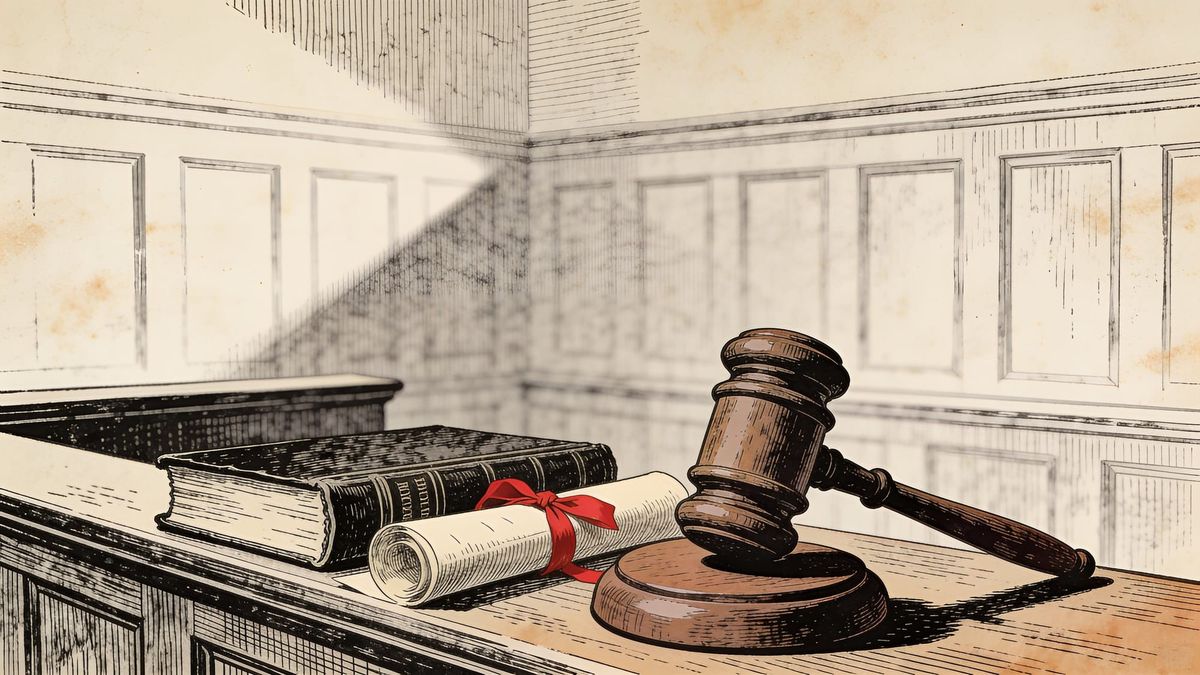
Strip the case to its principle and it is a question about labels. In 2000 Congress told every county in America that a land use decision may not place a substantial burden on religious exercise unless it serves a compelling interest by the least restrictive means. The question is whether a county can step outside that rule by calling its decision legislative.
On Tuesday, October 27, three judges of the United States Court of Appeals for the Fourth Circuit, sitting in Richmond, heard Chatham County, North Carolina, argue that it can.
The church on the other side is The Summit Church, a Triangle congregation with 13 campuses. It asked the county to rezone farmland so it could build. The commissioners said no, unanimously. A federal judge then barred the county from denying the request while the lawsuit goes on.
The county is not appealing the judge's view that the church will probably win. It is appealing the idea that any federal court can do anything about it.
What Happened
The Summit asked Chatham County to rezone the land in May 2024. According to the brief the United States filed in the appeal, the congregation in that part of the region meets in a local high school it has outgrown. The brief describes six parcels of about 97 acres in northeast Chatham County. The Biblical Recorder, reporting on the argument, describes three parcels of about 50 acres. We give both figures because the two accounts differ.
The county's advisory planning board recommended denial, citing the project's size, traffic, tax revenue and jobs. In December 2024 the Board of Commissioners unanimously denied the request. The federal brief says the commissioners cited insufficient tax revenue and high quality jobs, and that after the vote the board's chair said Chatham County is not a place for a church of that size. That account of the remark comes from the government's brief, which supports the church.
The church sued under the Religious Land Use and Institutionalized Persons Act, known as RLUIPA. In June 2025 the federal district court in the Middle District of North Carolina found the church likely to succeed on its claim that the denial substantially burdened its religious exercise. It enjoined the county from denying the rezoning while the case continues. It refused to go further and order the county to approve it. The county appealed in July 2025, and the appeal covers only that injunction.
The County's Argument
Concede the county its best point first, because it is a real one. Under North Carolina law, a rezoning is a legislative act. Federal judges do not usually tell elected boards how to vote, and the Constitution gives the states room that Washington may not commandeer. The district judge took that concern seriously enough to stop short of ordering approval.
"It's a case about separation of powers," the county's lawyer, Steven Bader, told the panel, according to the Biblical Recorder. The county's position, as the Justice Department describes it, is that because rezoning is legislative, the church lacks standing and the court lacked power to enjoin the denial, and that the Tenth Amendment forbids the order.
The church's lawyer, Elbert Lin, answered that the order does not make the county do anything. "There is nothing requiring (the county) to legislatively rezone right now," he said.
The Justice Department, which filed a statement of interest in the district court in April 2025 and a brief supporting the church on appeal, sent its own lawyer to argue. Noah Sacks told the court the department has "a strong interest in ensuring that RLUIPA provides broad protection for religious land use across the country."
Why the Label Matters
Here is the turn. If the county wins on this theory, it does not win only against megachurches. In any state that treats a rezoning as legislative, a common way a congregation gets land to build on would sit largely beyond the reach of the federal law written to protect it. That would be true for the next storefront mosque, the next Sikh gurdwara and the next Baptist plant in a rented school gym.
A law that protects worship only when a county chooses the right verb does not protect worship. It protects drafting.
The panel was Judge A. Marvin Quattlebaum Jr., Senior Judge Barbara Milano Keenan and District Judge Deborah L. Boardman of Maryland, sitting by designation. There is no date for a ruling.
What You Can Do
If you live in a county that is weighing a church, a mosque or a temple this year, go to the hearing. Listen for the reasons given. Size, traffic and tax revenue are real questions. They are also the words a board can reach for when the real objection is something else, and only the people in the room can tell the difference.
We will tell you when the Fourth Circuit rules. If this kind of reading helps you, share it with someone who sits on a planning board.
Sources
- Biblical Recorder, "Federal appeals court hears arguments in Summit Church's zoning case," October 29, 2026: https://www.brnow.org/news/federal-appeals-court-hears-arguments-in-summit-churchs-zoning-case/
- Brief of the United States as amicus curiae, The Summit Church-Homestead Heights Baptist Church, Inc. v. Chatham County, North Carolina Board of Commissioners, 4th Cir. No. 25-1832, March 27, 2026: https://www.justice.gov/crt/media/1433651/dl?inline=
- U.S. Department of Justice, Civil Rights Division, case page, The Summit Church-Homestead Heights Baptist Church v. Chatham County (M.D.N.C.): https://www.justice.gov/crt/case/summit-church-homestead-heights-baptist-church-v-chatham-county-north-carolina-board

Comments ()