
A Texas Judge Just Declined to Take the Posters Down. He Did Not Say They Were Lawful.
A denied temporary restraining order is not a ruling on the merits. The hearing that matters is August 17, and the standard at stake is one Texas Christians wrote for themselves.
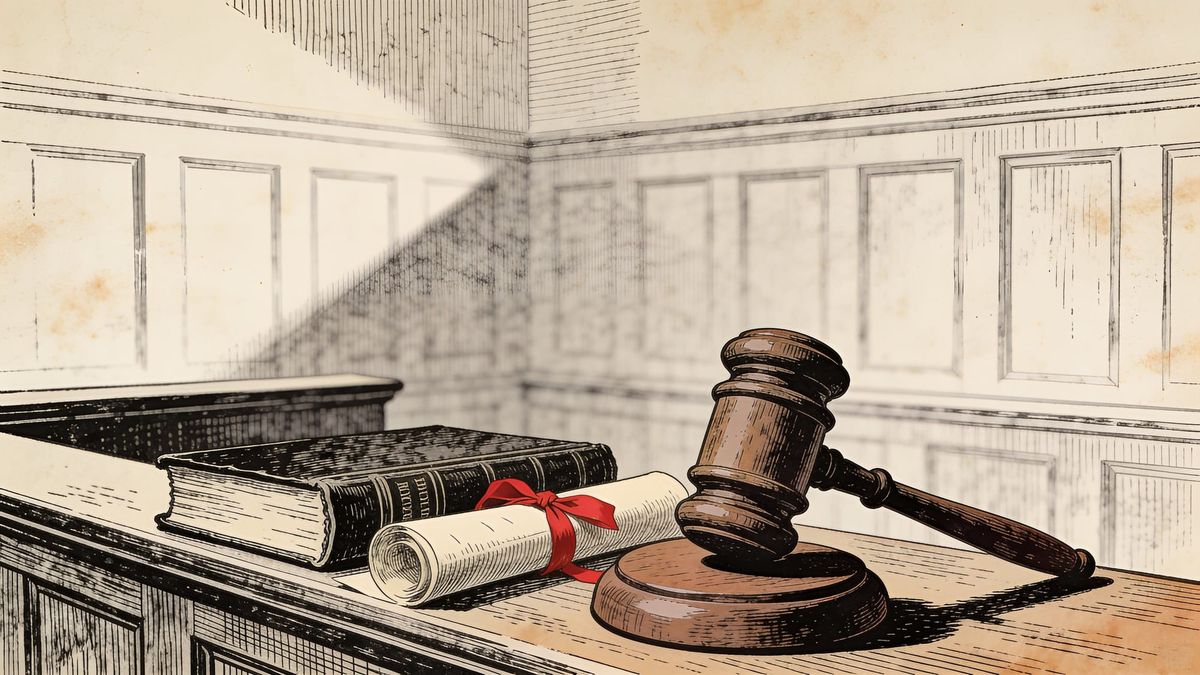
On Friday a Harris County judge refused to order the Ten Commandments off Texas classroom walls. That is the news, and it landed a week before children go back to school.
We wrote about this lawsuit on Wednesday, before there was a ruling, because of what the three mothers chose to sue under. Now there is a ruling, and it is smaller than either side's press release suggests.
The judge denied a temporary restraining order. He did not hold that Senate Bill 10 is constitutional. He did not reach the question at the heart of the case. A hearing on a temporary injunction is set for August 17, and that is the one worth watching.
Here is why this matters to you even if you live nowhere near Houston, and even if you would happily hang the Decalogue in every room you own.
Strip the case to its principle. The plaintiffs are not arguing the First Amendment. They filed no federal claim at all. They are suing under two Texas instruments, and both of them were built by religious conservatives to protect religious people.
The first is the Texas Religious Freedom Restoration Act, passed by the Legislature in 1999. Its operative language is short: a government agency "may not substantially burden a person's free exercise of religion." The second is Proposition 15, the Parental Rights Amendment Texas voters approved last November, which secures a parent's right "to exercise care, custody, and control of the parent's child, including the right to make decisions concerning the child's upbringing."
Senate Bill 10 requires every Texas public school classroom to display a donated poster of the King James Version of the Ten Commandments, no smaller than 16 by 20 inches, positioned so it can be seen. The three plaintiffs are Emily Roth, Audrey Rosa Nath, and Sanjam Kaur Sohal. Roth is raising her children without religion. Nath is raising hers across Jainism, Hinduism, Judaism, and Quakerism. Sohal is Sikh. Their case is Emily Roth, et al. v. The State of Texas, et al., filed July 30 against the state, Attorney General Ken Paxton, Education Commissioner Mike Morath, and three school districts.
Now the turn. A denied temporary restraining order is close to meaningless as precedent. A TRO is emergency relief. It asks a judge to freeze the world before anybody has briefed anything, and judges deny them routinely without forming a view on the merits. The plaintiffs' lead counsel, Hassan, said it plainly after the ruling: they asked for emergency relief and did not get it, and that ruling does not resolve the legal question at the heart of the case. She is right, and anyone celebrating Friday as a vindication of SB 10 is reading a scoreboard that was not keeping score. (The two outlets covering the ruling spell her first name differently, Megan and Meagan, and we have not resolved which is correct.)
Concede the state's best point, because it is a real one. Paxton's lawyers argue that a poster is displayed, not taught, and that a student is free to ignore it. There is no prayer to recite, no assignment to complete, no grade attached. Under any coercion test built on what a school makes a child do, the state has a serious argument, and the Fifth Circuit already permitted SB 10 to take effect this spring after a federal district judge, Fred Biery, had blocked it in eleven districts in August 2025.
But the federal question is not what is on the table on August 17. TRFRA asks something different and, for our purposes, more interesting: does the state substantially burden free exercise? That is a statutory standard Texas wrote for itself, and it is more protective than the federal floor. It is the same standard a Christian school will invoke the next time a state agency tells it whom to hire. It is the standard a church will invoke the next time a city zones it out of a storefront.
So the liberty question is not whether you like the poster. It is whether the shield holds when the person picking it up is a Sikh mother in Cypress-Fairbanks. A protection that only covers the majority is not a protection. It is a preference with a statute wrapped around it, and preferences change hands.
There is a version of this story built for outrage in either direction. The court record tells a slower one: a statute Christians fought for is about to get a serious workout, and the ruling that will actually tell us something has not happened yet.
Two dates. August 17 is the injunction hearing. Mid August is when the classrooms fill.
If you want to follow this properly, read the TRFRA text yourself. It is one sentence long and it is doing more work in American religious liberty than most Supreme Court opinions. Then watch what the judge says about substantial burden, because that phrase is the whole ballgame, and how it is defined in Harris County this month will be quoted back at all of us later.
The Red Lighthouse reads the filings so you can argue from the record instead of the headline. This piece is free to read and free to send. If it was useful, forward it to the person in your life who has already made up their mind about this case.
Sources
- The Texas Tribune and Religion News Service, "Houston mothers' bid for temporary hold on Ten Commandments posters in Texas classrooms denied," July 31, 2026, updated August 7, 2026. Link
- KPRC Click2Houston, "Houston moms lose first round in fight over Ten Commandments in Texas classrooms," August 7, 2026. Link
- Texas Civil Practice and Remedies Code, Chapter 110, Section 110.002. Link
- Texas Senate Bill 10, 89th Legislature. Link
- Texas Senate Joint Resolution 34, Proposition 15 bill text. Link

Comments ()