Congress Gave the Religious Freedom Commission Two More Years. The President Signed It on Election Day.
On November 3 the President signed H.R. 1744, keeping the U.S. Commission on International Religious Freedom running through 2028. Why a body that can only recommend still matters, and the one standard it has to keep.
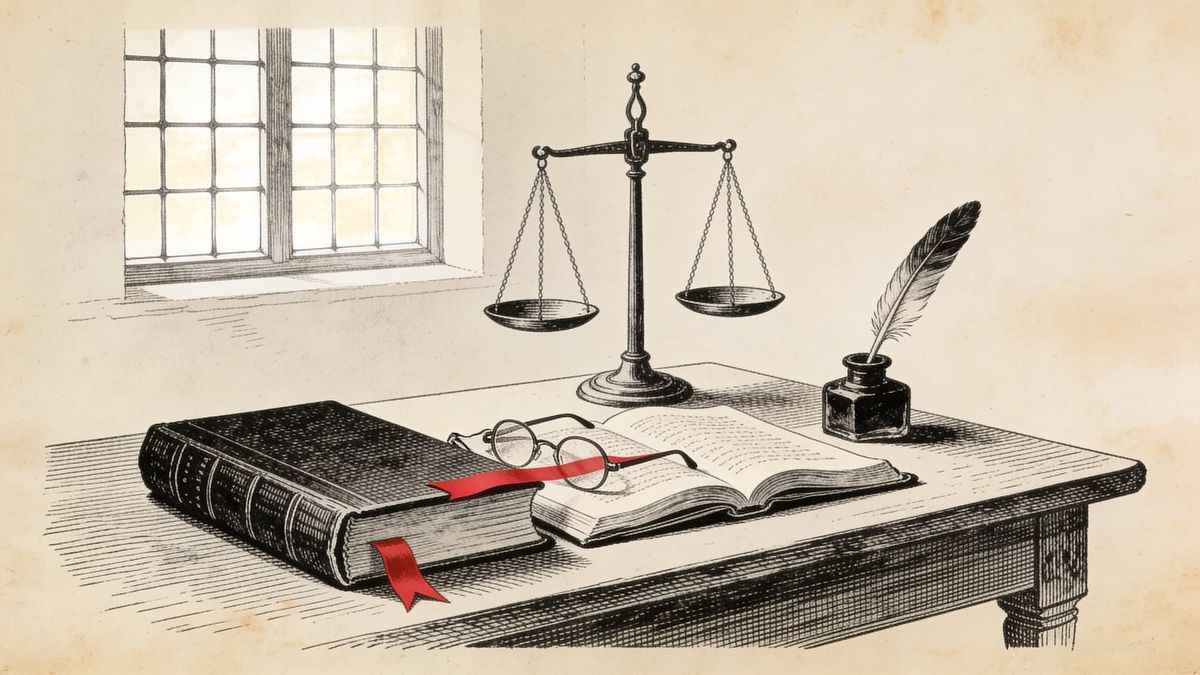
Strip the story to its principle and it is not complicated: a government that wants to hear the truth about persecution abroad has to pay someone to tell it, including when the truth is inconvenient.
On Tuesday, November 3, while the country was voting, the President signed a bill that keeps that someone in business.
H.R. 1744, the United States Commission on International Religious Freedom Reauthorization Act of 2026, extends the commission and authorizes its annual funding through 2028.
It drew almost no notice. It deserves more, and the reason is not the one you would guess.
What the Law Does
The White House announced the signing in a one line statement: the act "extends and authorizes annual appropriations" for the commission through fiscal year 2028. The enrolled bill's full title, as published by the Government Publishing Office, reads "through December 31, 2028." Religion Clause, the law blog that tracks church and state litigation and legislation, reported the signing the next day.
That is all it does. It does not rewrite the commission's mandate or add new powers. It keeps the lights on.
Representative Chris Smith of New Jersey sponsored it. The House passed it on June 8, by what Smith's office called an overwhelming margin. A Senate companion was introduced by Senator Ted Budd with Senators Chris Coons, Jim Risch, Jeanne Shaheen and Ted Cruz, two Republicans and two Democrats beside him.
What USCIRF Is, and Is Not
Congress created the commission in the International Religious Freedom Act of 1998. It is independent and bipartisan. It holds hearings, sends commissioners abroad, and every year recommends which governments the State Department should name Countries of Particular Concern, the designation reserved for the worst violators of religious freedom.
Here is the part that matters. The commission recommends. It does not decide. The State Department decides.
A fair critic can press on that. A body that can only recommend is worth exactly what its recommendations are worth, and an administration of either party is free to ignore them. That is a real limit and we will not pretend otherwise.
But it is also the design. Smith put it this way when the House passed the bill: "USCIRF is a genuinely independent force, a constructive influence on the State Department." An office inside the government answers to the government. A commission outside it answers to the record.
Why Renewal Is the Whole Story
Independence on paper means little if the body has to come back to Congress every two years and ask to exist. That is the commission's life. When the House voted in June, Smith asked colleagues to reauthorize it "for two more years." Each extension is a moment when its work can quietly stop.
This week it did not stop. The U.S. Conference of Catholic Bishops wrote that it was "vital that USCIRF be reauthorized," in a letter Smith's office quoted when the House passed the bill.
Readers of this site meet the commission's work more often than they may realize. Its reports sit behind much of what we know about Nigeria, Pakistan, China and India, the countries our Watchman dispatches return to week after week.
The Pluralist Test
Now the turn. USCIRF does not report only on Christians. Its pages document Uyghur Muslims in China, Baha'is in Iran, Ahmadis in Pakistan, Jehovah's Witnesses in Russia. A Christian reader may skim those sections.
Do not. A commission that defended only our brothers and sisters would be a lobby, and governments would treat it like one. Its credibility on a burned church in Benue comes from the same place as its credibility on a shuttered mosque in Xinjiang: it applies one standard to everyone.
The liberty we ask the world to grant a pastor in Pakistan must also shield the Ahmadi down the road, or it shields no one.
What You Can Do
Read the commission's next annual report when it comes out in the spring. It is free, it is long, and the country chapters are plainer than most news coverage. If your representative or senators voted for this bill, a short note of thanks costs nothing and is remembered.
And when the next extension comes due, in 2028, notice it. This one passed while the country was looking elsewhere.
Sources
- The White House, "Bill signed: H.R. 1744 and H.R. 8205," November 3, 2026, as republished by Mirage News: miragenews.com
- U.S. Government Publishing Office, H.R. 1744 (ENR), enrolled bill: govinfo.gov
- Religion Clause, "President Signs Legislation Extending Life of U.S. Commission on International Religious Freedom," November 4, 2026: religionclause.blogspot.com
- Office of Rep. Chris Smith, House passage of H.R. 1744, June 9, 2026: chrissmith.house.gov
- News Ghana, "USCIRF Extended Through 2028 as Nigeria Crisis Shapes Debate": newsghana.com.gh

Comments ()