Thirty Three Churches Sued to Leave the Methodists With Their Buildings. A State Court Said It Cannot Decide.
Thirty three congregations wanted to leave the United Methodist Church with their buildings and accused the West Virginia Conference of fraud. The state's high court said that is a church question, not a court's. The Advocate on why the rule that stopped them protects every church.
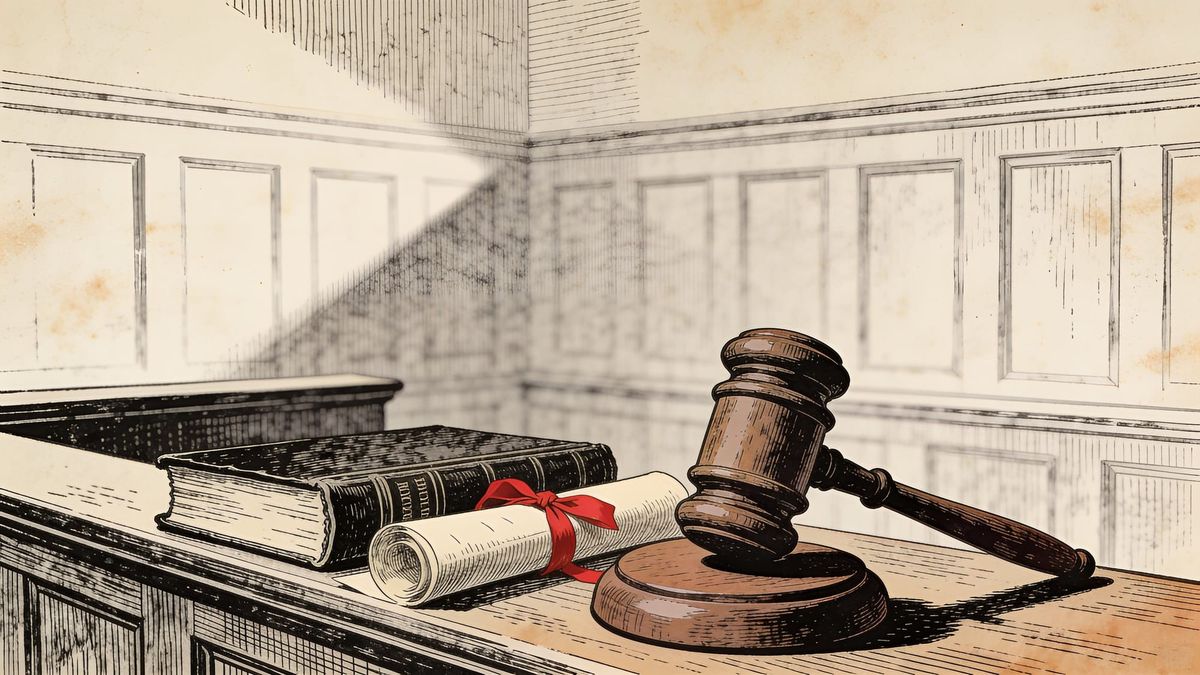
Strip the case to its principle and it is not complicated: when a church's own law decides who owns a building, a civil judge does not get to read that law for the church.
On Wednesday, November 4, the Supreme Court of Appeals of West Virginia applied that principle to thirty three congregations that want out of the United Methodist Church and want to take their buildings with them.
The justices stopped their lawsuit cold. The churches had alleged fraud. The court said the fraud claim was really a church argument wearing a different coat.
Most of the readers who cheer the outcome will dislike the denomination that won. Most who dislike the outcome will be cheering for a principle they need. That is worth slowing down for.
What the Court Did
The case is State ex rel. Trustees of the West Virginia Conference of the United Methodist Church v. Wills. The Conference asked the state's highest court for a writ of prohibition, an order forbidding a lower court from going further. The court granted it. Justice Charles S. Trump IV wrote the opinion for the court. None of the three reports we read mentions a dissent.
The thirty three congregations filed suit in 2024, The Christian Post reports. They claimed the Conference had told them they could leave with their property after the denomination changed its rules, and they accused it of fraud, breach of fiduciary duty, breach of contract and conspiracy. According to WV MetroNews, they said they had paid for, maintained and insured those buildings for years, and they cited issues of conscience over the denomination's policies on same sex marriage and openly gay clergy.
The road to Charleston was not straight. MetroNews reports that a Mercer County judge first dismissed the churches' claims on First Amendment grounds and later recused himself. A second judge, Mark Wills, reinstated the case on March 13, writing that the fraud and collusion claims were "questions of fact for a jury." That is the ruling the Conference asked the high court to stop.
The Doctrine
Courts call it ecclesiastical abstention. In the court's words, as quoted by The Christian Post, "civil courts must refrain from deciding disputes that require them to interpret or resolve matters of religious doctrine."
The Methodist Book of Discipline holds that a local church's property is held in trust for the whole denomination. Between 2019 and the end of 2023 a temporary rule, Paragraph 2553, let congregations leave with their buildings for reasons of conscience if they met certain obligations, UM News reports. More than 7,600 churches left the denomination in that period. The West Virginia Conference let twenty four congregations go in 2023, both UM News and The Christian Post report. The rule expired on December 31, 2023, and the 2024 General Conference removed it. The denomination's top court, the Judicial Council, later ruled there was no other path out with property.
These thirty three came after the door closed. Their argument was that the Conference had promised otherwise.
The justices did not accept that framing. "Instead, the allegations challenge the Conference's interpretation and application of the Church's governing law," Justice Trump wrote, according to The Christian Post, and so "do not bring this case within the narrow exception to ecclesiastical abstention." Calling a disagreement over what the Discipline means a false statement, the court said, as UM News quotes it, does not make it one.
And the line that will be quoted for years, per MetroNews: "That a dispute has consequences for ownership of property does not negate the constitutional imperative."
The Fair Point on the Other Side
Concede what is true. These congregations raised the money, kept the roofs on and paid the insurance. To be told by a court that the question is not even a court's to answer feels like being told the deed means nothing.
The Conference, for its part, thanked the court for "its reaffirmation of the constitutional principles" protecting the church's authority, UM News reports. The National Center for Life and Liberty, which represented the churches, did not respond to UM News.
The Turn
Here is why a traditionalist should not wish this case the other way. The same rule that sends these thirty three churches back to the Judicial Council is the rule that keeps a state judge from telling a Baptist association whom it must seat, a Catholic diocese whom it must ordain, or a Pentecostal congregation what its own bylaws mean. A judge who can rule that a denomination misread its own book can rule that yours did.
The liberty to govern a church from within must shield the church you left, or it shields none of them.
What You Can Do
If you sit on a church board, find out who holds title to your building and what your governing documents say about leaving. Read them before you need them. If your church belongs to a denomination with a trust clause, that question has an answer today, and a court will not give you a different one later.
Other congregations are still litigating against the denomination in other states. We will follow where the next one lands.
Sources
- WV MetroNews, "State justices rule civil courts cannot settle Methodist property disputes," November 8, 2026: wvmetronews.com
- The Christian Post, "WV court blocks suit by 33 churches seeking to leave the UMC," November 8, 2026: christianpost.com
- UM News, "State supreme court blocks church property suit," November 7, 2026, as republished by United Methodist Insight: um-insight.net
- Supreme Court of Appeals of West Virginia, State ex rel. Trustees of the West Virginia Conference of the United Methodist Church v. Wills, No. 26-198 (case listing): law.justia.com

Comments ()