Wisconsin Voters Passed Two Constitutional Amendments on Tuesday. They Turned Down the One About Houses of Worship.
Wisconsin voters rejected Question 2, which would have barred government from closing places of worship in an emergency, by about four points while passing the two other amendments. What the vote changed, what it did not, and the fair case on both sides.
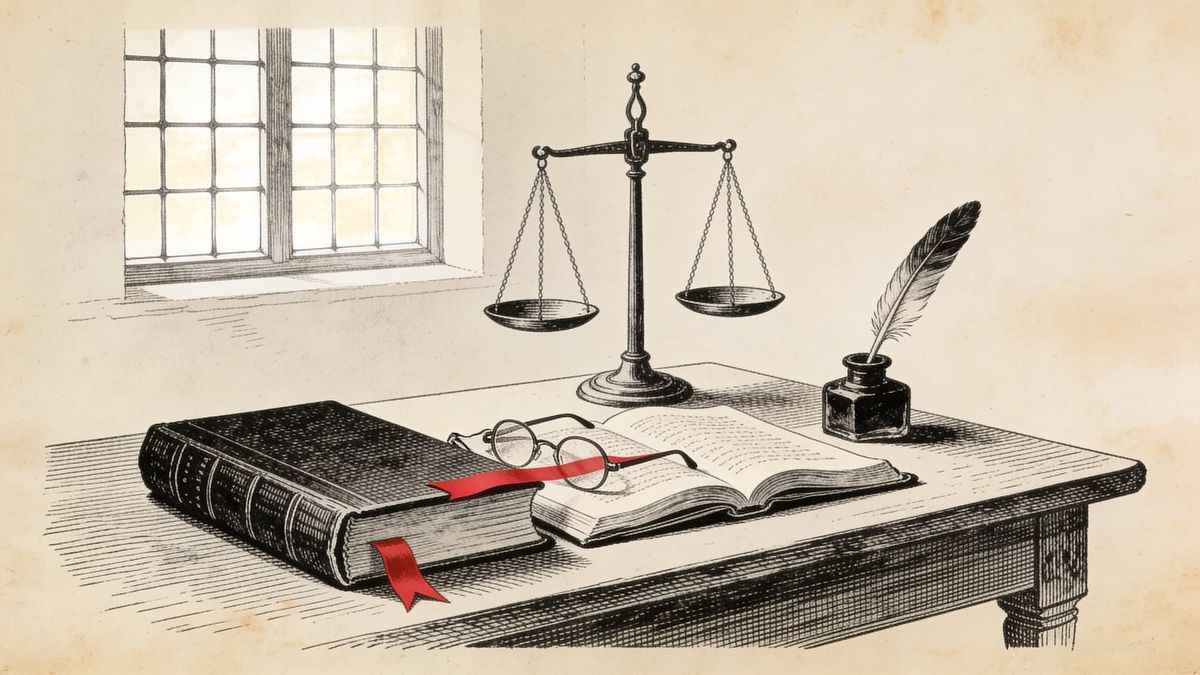
Strip Tuesday's result to its principle and it is simple: in Wisconsin, an emergency is still a lawful reason for government to close a house of worship.
Voters were asked to change that. On November 3 they said no, by about four points.
They said yes to the two other amendments on the same ballot.
That split is the most interesting thing about the night. It does not mean what the loudest people on either side will say it means.
What Voters Turned Down
Question 2 would have added a sentence to Article I, Section 18 of the state constitution, the section on religious liberty. Under it, neither the state nor any political subdivision could "order the closure of or forbid gatherings in places of worship" during a state of emergency, including a public health emergency.
With 95 percent of precincts reporting, Ballotpedia's unofficial count had 1,340,808 votes against, 51.97 percent, and 1,239,027 for, 48.03 percent. The Jewish Telegraphic Agency and Wisconsin Public Radio both reported the measure failed.
So the law stays where it was. Ballotpedia notes that state statutes still let the governor declare an emergency and let the Department of Health Services forbid gatherings, including in churches. WPR put it plainly: the existing emergency powers of state public health officials remain.
How It Got There
The Republican controlled Legislature passed it in two consecutive sessions before sending it to voters. The Senate passed it 21 to 10 in November 2023 and the Assembly 63 to 33 in February 2024. In January 2026 the Assembly passed it again, 56 to 43, and the Senate 18 to 15. The votes ran largely along party lines.
The cause was COVID. WPR recalled that early emergency orders limited indoor, in person religious gatherings to fewer than ten people. We set out that history, and the case for and against, when we previewed the vote on October 19.
The Other Two Questions
Here is the split. Question 1, which limits a governor's partial veto, passed narrowly, 50.7 to 49.3 percent according to WPR. Question 3, which bars government from treating people differently by race, sex, national origin or ethnicity, passed with 56 percent, JTA reported.
Voters who said yes to limiting one kind of executive power said no to limiting another. Whatever that is, it is not a straight party vote.
The Fair Point
Concede what the no side got right, because it made a real argument.
The League of Women Voters of Wisconsin warned the measure threatened public health and said current law does not "prevent any person from worshipping God." Rabbi Joel Alter of Congregation Beth Israel Ner Tamid in Milwaukee voted no. He told JTA, "I don't think the state constitution is the way to respond to concerns that people have," and said he would rather see advisory panels and hearings on how to treat houses of worship in the next emergency. JTA also reported that critics said the text never defined a place of worship, leaving open whether a home hosting a service would count.
A flat bar admits no exceptions. Emergencies are, by definition, the cases no one planned for.
The yes side had its own case. The Wisconsin Family Council said the amendment would ensure "that your local church is never treated as 'non-essential' by the government again." That is not a slogan. It is a memory a great many Wisconsin pastors share.
What Did Not Change
Begin with what the vote did not do, because that is where the panic will live.
It did not touch the First Amendment. On November 25, 2020, the US Supreme Court granted the Roman Catholic Diocese of Brooklyn an injunction against a New York order capping attendance at religious services, as the Court's docket in No. 20A87 records. A Wisconsin congregation facing a capacity order tomorrow could still make that federal argument in court. What voters declined was something different: a categorical rule in the state constitution in place of a case by case fight.
Wisconsin is not the first state to say no. Ballotpedia notes that Arkansas voters rejected a broad religious freedom amendment in 2022, while Texas wrote a protection for religious services into its constitution in 2021.
The liberty to gather that a parish claims in Madison has to shield the synagogue in Milwaukee and the house church in Green Bay on the same terms, or it shields no one. That principle did not lose on Tuesday. A particular sentence did.
What You Can Do
If you live in Wisconsin, ask your state legislators what they will do instead. The rabbi who voted no asked for hearings. Hold everyone to that. The next emergency will not wait for a ballot.
If you live elsewhere, find out whether your state has written anything down at all, and read the actual text before anyone tells you what it means.
The Red Lighthouse covers religious liberty from the record, not the outrage cycle. If that is the reporting you want more of, pass this to someone who argued about this vote at dinner.
Sources
- Ballotpedia, "Wisconsin Prohibit Government Closure of Places of Worship During Emergencies Amendment (2026)": https://ballotpedia.org/Wisconsin_Prohibit_Government_Closure_of_Places_of_Worship_During_Emergencies_Amendment_(2026)
- Jewish Telegraphic Agency, "Wisconsin referendum on freedom to worship fails at the ballot box," November 4, 2026: https://www.jta.org/2026/11/04/politics/wisconsin-referendum-on-freedom-to-worship-fails-at-the-ballot-box
- WPR, "Voters give split decision on constitutional amendments to limit governor's powers, DEI," November 2026: https://www.wpr.org/news/wisconsin-constitutional-amendments-2026-governors-powers-dei
- Supreme Court of the United States, docket 20A87, Roman Catholic Diocese of Brooklyn v. Cuomo: https://www.supremecourt.gov/docket/docketfiles/html/public/20a87.html
- The Red Lighthouse, "Wisconsin Votes November 3 on Keeping Churches Open in Any Emergency. The State's Catholic Conference Took No Side," October 19, 2026: https://www.theredlighthouse.org/advocate-wisconsin-places-of-worship-amendment-november-3/

Comments ()