
A Methodist Minister Called His Work at Aberfan the Ministry of Tears. He Is Ninety Six Now.
On October 21, 1966, a coal tip slid onto a Welsh school and killed 116 children and 28 adults. The young Methodist minister who went into the mortuary with the fathers is ninety six now. A reflection on what he called the ministry of tears.
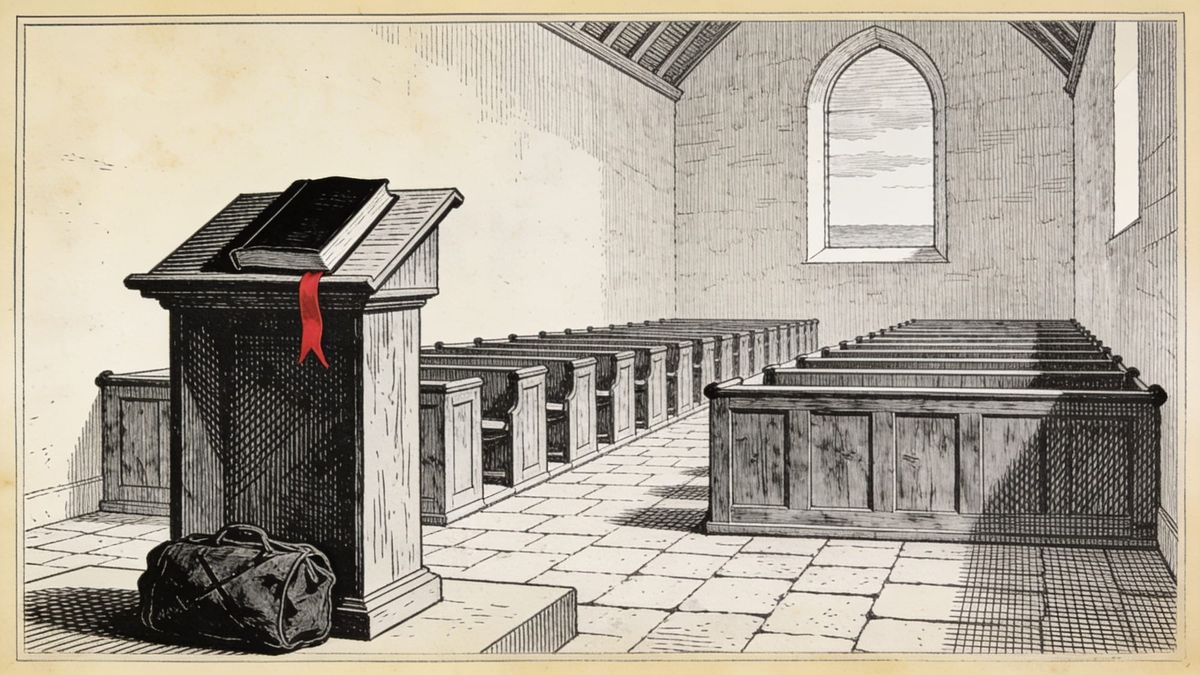
I am good at the first sentence of comfort. I know how to say I am so sorry, and I know where to stand at a funeral. What I have never learned is what to do on the third day, when the casseroles stop and the sentences run out.
Irving Penberthy learned it in one week in 1966, in a Welsh mining village, at the age of thirty five.
He was the minister of Zion Methodist Church in Aberfan. On the morning of October 21, a colliery tip above the village slid down onto Pantglas Junior School and the houses around it. It killed 116 children and 28 adults. Wednesday was the sixtieth anniversary. Penberthy is ninety six now, and he planned to go back for it.
The road to Pontypridd
He told the story this autumn to the Methodist Church, which published it ahead of the anniversary. He had set out around nine that morning to drive to Pontypridd. Emergency vehicles passed him going the other way. Something told him to turn around.
The police let him into the village because he was wearing his clerical collar. He stayed through the night.
The dead were carried to Bethania Chapel, which became a mortuary. Over the following days parents came to identify their children there, and Penberthy went in with the fathers. Many of the children had been in his Sunday School.
He has a name for what he did. "I called it the ministry of tears," he said.
What the phrase gets right
I keep turning those four words over, because they refuse the thing I am always tempted to do with grief, which is to fix it.
A ministry of tears does not explain the slag heap. It does not tell a father in a chapel doorway that God has a plan. It walks in beside him and looks at what he has to look at. That is the whole job, and it is almost unbearable, and it is the job.
Paul put it in one line to the church in Rome: "Weep with those who weep." He did not add a second clause about what to say afterward. John put it in two words at the tomb of Lazarus, where Jesus, who knew he was about to raise his friend, wept anyway.
I find that last detail hard. If anyone had a reason to skip the tears and go straight to the answer, it was Jesus at Bethany. He did not skip them.
Sixty years
ITV reported that the village held memorial events on Wednesday, with a moment of silence for the 144. The Methodist Church said Penberthy would return for it, as he did for the fiftieth, when survivors met him who still remembered him.
That is the other half of the ministry of tears, and the half I am worst at. It is not only the first night. It is the sixtieth year. It is going back.
Most of what we cover here happens far away, to people we will never stand beside. We cannot drive to Bethania Chapel. But we can refuse to be the kind of Christian who only shows up for the first sentence. We can keep the names. We can still be weeping when the cameras have gone home.
Close
Penberthy did not stop the tip. He could not. He turned his car around, and then he stayed.
If there is someone in your church whose grief has outlasted everyone's casseroles, this is a good week to call them. Do not bring an answer. Bring a chair. And if this piece meant something to you, pass it to one person who sits with the grieving for a living.
Sources
- The Methodist Church in Britain, "Sixty years since Aberfan: a minister remembers," October 2026: methodist.org.uk
- ITV News Wales, "Prime minister meets Aberfan survivors ahead of disaster's anniversary," October 19, 2026: itv.com
- Nation.Cymru, "Wales invited to observe minute's silence to mark 60th anniversary of Aberfan tragedy," September 22, 2026: nation.cymru
- Romans 12:15 and John 11:35 (ESV): esv.org
Comments ()