
Fifty Clerics Signed a Peace Accord in Abuja. Six Weeks Later Gunmen Killed a Pastor Walking to Church.
I have signed things I did not expect to change anything. In August more than fifty Christian and Muslim leaders signed a peace accord in Abuja, and the killing did not pause for the ink to dry. What a signature can and cannot do in Nigeria, and why I have decided to take it.
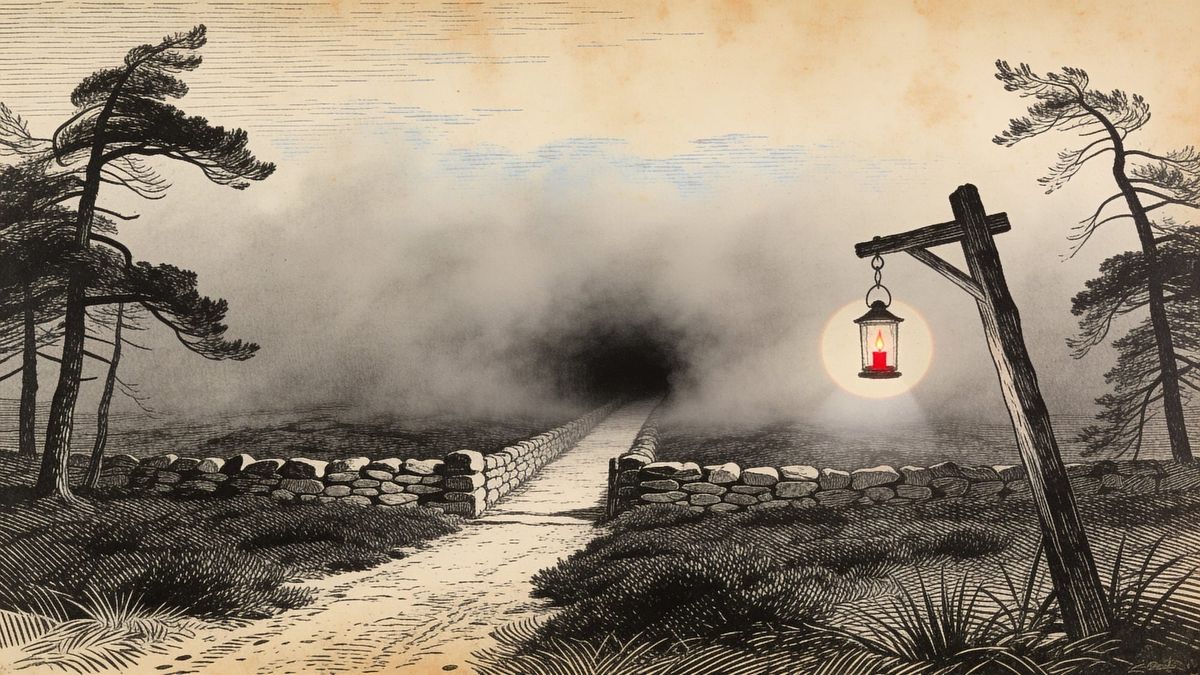
I signed a church covenant once with a borrowed pen, on a Sunday, in a line of people who wanted to get to lunch. I could not tell you now what I promised. I have initialed petitions on clipboards outside grocery stores and felt, for about a block, like a citizen. Ink is cheap. I have never believed a signature could stop a bullet.
In the middle of August, at the close of a two day meeting organized by the Saudi based Muslim World League, more than fifty Christian and Muslim leaders signed an accord against hate speech and religious violence. The Deputy Senate President stood in for President Tinubu. John Praise Daniel, who chairs the Northern Christian Religious Leaders' Assembly, put the promise in a sentence: "No hate speech, and no disrespect for other religious groups, no calling of people as infidels."
Nine days later, at Friday prayers near Dekera in Niger State, gunmen emptied a mosque. Reuters put the number taken at an estimated six hundred, thirty dead and buried on the Sunday, two thousand people across the border into Benin. Nigeria's Catholic bishops wrote first to the Muslim families: "An attack on any place of worship is an attack on our collective humanity." Then, on September 20, a Baptist pastor was killed walking to church at Dorowa Babuje on the Plateau. We reported it on Monday. The accord was five weeks old.
Two pages, then. One carries fifty signatures. The other carries the names of the dead, and it is longer. Which one tells the truth about Nigeria?
The honest first answer is the second one, and everybody in Abuja knew it. International Christian Concern, which welcomed the accord, wrote in the same breath that "the signing itself should not be mistaken for a solution." The bishops, in the letter that stood with the mosque, told the government what its job is: "impunity fuels repetition." SBM Intelligence, a Lagos research firm, counts nearly 7,900 people abducted across Nigeria in the past year, about 900 killed, and $5.8 million in confirmed ransom. Fifty clerics cannot arrest anyone. If the measure of the accord is the body count, it failed the week it was signed.
Jeremiah has a line for this and I have used it on every peace conference I have read about: they have healed the wound of my people lightly, saying peace, peace, when there is no peace. It is the wrong one here, because it was written about prophets who lied, and the men in Abuja did not claim the fighting would stop. They claimed something smaller and stranger. They claimed their own mouths.
That is what the accord actually governs. Not the gunman. The sermon. Daniel's sentence is about what a preacher says on Sunday and an imam says on Friday, and about the word infidel, which is the word that makes a farmer's murder feel like something else. The clerics do not control the fire. They control a good deal of the fuel, and for once a room of them said so out loud.
Then the young did it again. In early September the youth wing of the Christian Association of Nigeria and the National Council of Muslim Youth Organisations signed their own accord in Abuja, ahead of the January election. "This Peace Accord represents more than a document," said Ademola Daniel Arowolo, who signed for the Christian side. "It is a covenant of hope." I am allergic to that kind of sentence and I read it three times. A covenant is what my church had me sign with the borrowed pen. It told me who I had agreed to be.
Concede the fair points. The Muslim World League is Saudi funded. Tinubu's party is running two Muslims on its ticket again in January and needs Christian anger cooled. A signature is a photograph before it is anything else. Bulwer-Lytton's line about the pen and the sword was written for the stage, and it plays like it. All true. And then there is Fatima Umar, forty, a Muslim mother of seven from Plateau, the state where the pastor died, who told Religion News Service: "In all the years I have attended Islamic teachings, I have never been taught to hate or attack Christians because of their religion." Nobody made her sign anything.
Paul wrote to Corinth about a different kind of document: a letter "written not with ink, but with the Spirit of the living God; not in tables of stone, but in fleshy tables of the heart." I do not know what is written on the hearts of fifty men in Abuja. I know what Fatima Umar has written on hers. And I know what the bishops wrote, because they sent it first to families who do not share their creed.
The pen in Abuja was borrowed too, in a sense. It will not raise the pastor at Dorowa Babuje. But the next time a preacher on the Plateau reaches for the word that turns a murder into a holy war, fifty men have promised, in front of witnesses, not to. That is not peace. It is the removal of one excuse for war, and I have decided to take it.
If you want the sermon and the body count read together, every morning, that is what this desk is for. Come keep the watch with us.
Sources
Religion News Service, September 23, 2026
International Christian Concern, August 26, 2026
Christian Daily International, August 19, 2026
Catholic Bishops' Conference of Nigeria statement, via Aid to the Church in Need, September 1, 2026 (primary)
Al Jazeera with Reuters, August 26, 2026
Christian Association of Nigeria, September 6, 2026 (primary)
Comments ()