
The Clocks Fall Back on All Saints' Day. Moses Asked to Be Taught How to Count His Days.
Next Sunday the clocks hand most of us an extra hour, on the same morning the Church remembers its saints. Psalm 90 is a prayer for the one skill that hour could teach.
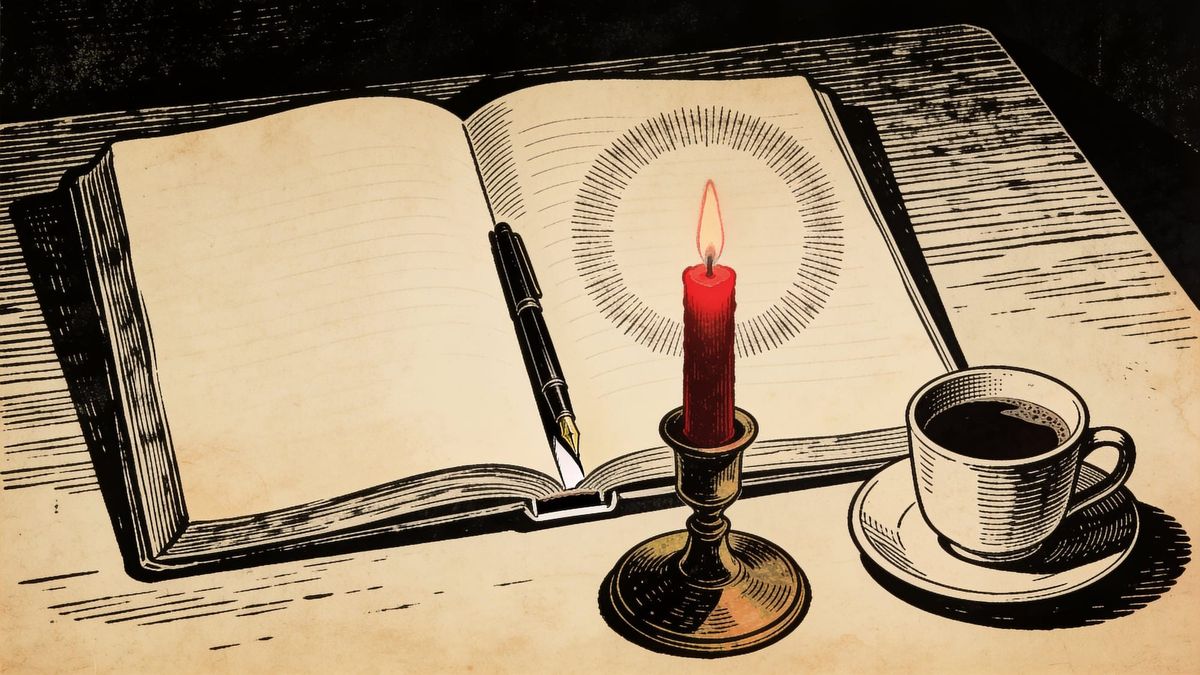
Next Sunday, at two in the morning, most of the clocks in this country will quietly hand me an hour I did not earn.
I know exactly what I will do with it. I will sleep through it. I have done the same thing every first Sunday of November for as long as I can remember, and I have never once woken up and wondered where it went.
This year the hour lands on November 1, which is also All Saints' Day. The calendar has put the extra hour and the feast of the faithful dead on the same morning. I keep turning that over, because I suspect it is a better sermon than most of the ones I will hear.
The prayer of a man who counted
Psalm 90 is the only psalm headed with the name of Moses. It is the prayer of a man who spent forty years walking a generation into the ground. He watched people he loved fall in the desert and he buried them in sand that would not keep their names.
"For a thousand years in thy sight are but as yesterday when it is past," he prays, "and as a watch in the night." Then he asks for the strangest gift in the whole Psalter. "So teach us to number our days, that we may apply our hearts unto wisdom."
He does not ask for more days. He asks to be taught to count the ones he has.
Moses is not asking to be frightened. He is asking to be taught, which means he assumes he does not know how. Counting your days is a skill. It can be learned. It can also be neglected for decades by a man who sleeps through his free hour every November and calls it rest.
The other guests on Sunday
All Saints' Day was made for the people who did learn. The Church sets aside the morning to remember them, the ones with feast days and the far larger number without one, the ones whose names were kept by no one but God.
Hebrews 11 is a roll call of them. It names Abel and Noah and Abraham and Rahab, and then the writer admits he is out of time. "And what shall I more say? for the time would fail me to tell of Gedeon, and of Barak." He rattles off a few more names in one breath, and then he stops giving names and starts giving verbs. They were stoned. They were sawn asunder. They wandered about in sheepskins and goatskins. "Of whom the world was not worthy."
Then comes the turn I always forget. "Wherefore seeing we also are compassed about with so great a cloud of witnesses, let us lay aside every weight." The saints are not in the chapter to be admired. They are there as a crowd in the stands, and we are the ones still on the track.
Every one of them was given a fixed number of days and no extra hour to bargain with. What made them saints is not that they had more time than I do. It is that they knew what time was for.
What I am going to try
So here is my small plan for next Sunday, and you are welcome to steal it.
When the clock falls back, I am going to set an alarm for the hour I would normally lose to sleep. I am going to sit up in the dark kitchen with Psalm 90 and Hebrews 11 and a pen. I am going to write down the names of the people whose faith I am living off. A grandmother. A youth pastor. A believer I will never meet who is in a cell tonight for the name I so casually wear.
Then I am going to pray through the list, and I am going to ask the question Moses asked. Not for more days. For the wisdom to count the ones I have.
It is one hour. The calendar handed it to me on the feast of the saints. I would like, for once, to be awake for it.
If this was worth your time, forward it to someone who sleeps through November too.
Sources
- Psalm 90:4, 12 (King James Version): biblegateway.com
- Hebrews 11:32 to 38 and 12:1 (King James Version): biblegateway.com
- National Institute of Standards and Technology, "Daylight Saving Time" (ends at 2 a.m. local time on the first Sunday in November): nist.gov
Comments ()