Two Bishops Warned Machines Could Count Who Goes to Church. Psalm 139 Was Written for Being Watched.
For International Religious Freedom Day, two U.S. bishops warned that AI could widen the surveillance of religious groups. My phone already knows where I go on Sunday. David prayed about being watched, and he asked to be searched more.
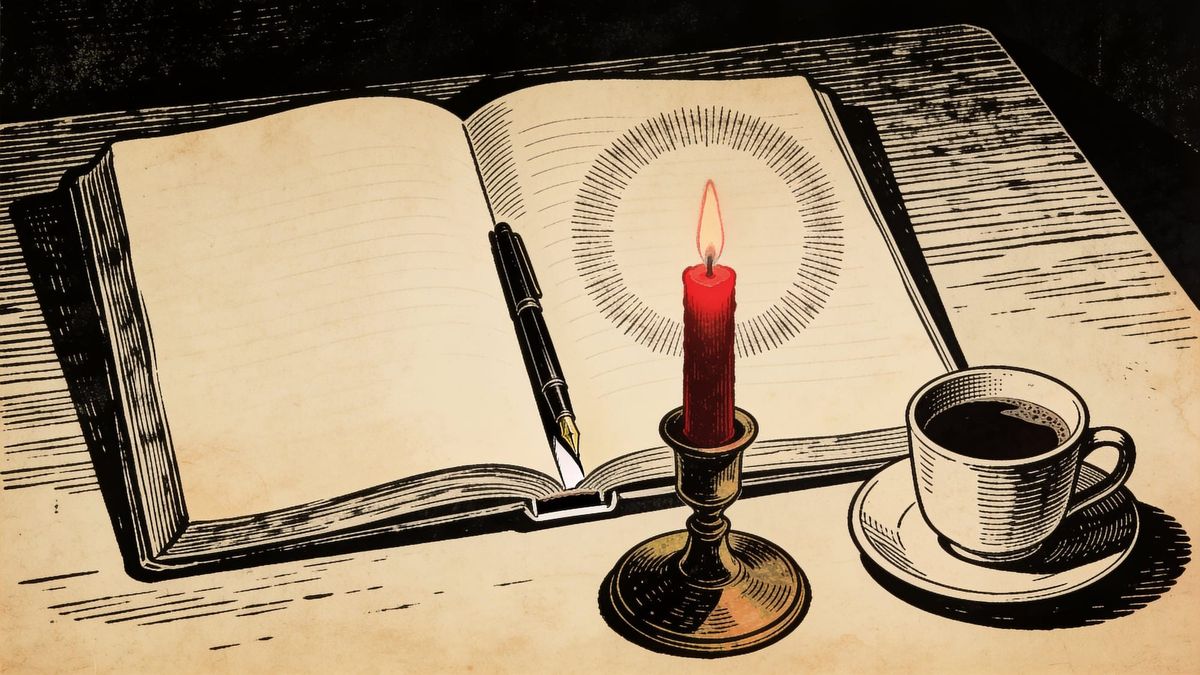
My phone knows where I go on Sunday mornings. I have never told it. It worked it out on its own, the way it worked out the grocery store and the gym, and every few weeks it offers me the drive time to church before I have thought about leaving.
I used to find that faintly sweet. Now I am not sure what I find it.
Last week two American bishops put a sentence on paper that made me look at the phone differently. Archbishop Alexander Sample of Portland, who chairs the bishops' Committee for Religious Liberty, and Bishop A. Elias Zaidan of the Maronite Eparchy of Our Lady of Lebanon, who chairs the Committee on International Justice and Peace, wrote that artificial intelligence and related tools "have the potential to expand such abuses, increasing the scope of surveillance and persecution of religious groups."
The statement was released for International Religious Freedom Day, October 27, the anniversary of the day in 1998 when the International Religious Freedom Act was signed. It is not a long document. That one sentence is the part I cannot put down.
The oldest question about being watched
Persecution has always depended on a list. Somebody has to know who gathers, and where, and when. For most of history that knowledge was expensive. It took informers, and informers got tired, and could be bribed, and sometimes looked the other way because the woman on the list had nursed their mother.
The bishops' worry, as I read it, is that the list is getting cheap. A machine does not get tired. It does not remember who nursed its mother. It simply notices that a certain phone goes to a certain building every seventh morning, and it keeps noticing.
I do not live under a government that wants to use that against me. Many of the people we write about every morning do. That gap is real, and I would rather not pretend I feel what they feel.
Searched and known
And yet the oldest prayer about being watched is not a complaint. "O LORD, thou hast searched me, and known me," David writes in Psalm 139. "Thou knowest my downsitting and mine uprising, thou understandest my thought afar off."
That psalm describes total surveillance. Nothing escapes. Not the walk to church, not the walk away from it. And David does not ask to be hidden. He asks to be searched more: "Search me, O God, and know my heart."
The difference is not in how much is known. It is in who knows, and what they want.
A state that maps the faithful wants to find them so it can stop them. The God of Psalm 139 finds us so that "even there shall thy hand lead me." One kind of knowing is a net. The other is a hand.
The bishops seem to understand this. Their statement leans on Pope Leo XIV's encyclical Magnifica Humanitas and its teaching that the right to religious freedom is rooted in human dignity. They wrote that "in the age of AI, human dignity remains at the heart of defending religious freedom." That is not a technical claim. It is a claim about who a person is before anyone has tracked him.
What I can do with my Sunday
I am not going to throw away my phone. I suspect you are not either.
But I can stop treating the ordinary fact of going to church as something nobody would ever bother to count. In some places it is the first thing they count. Our brothers and sisters in those places walk in anyway, knowing the list exists, knowing their name is on it.
So this Sunday, when the phone offers me the drive time, I am going to let it be a small reminder. Not of the machine. Of the people for whom the same notice would be a warning, and who go.
Somebody is always keeping a record of who shows up. The question the psalm leaves me with is which record I am living for.
If this was worth your time, send it to one person who goes to church with you. And pray, on Sunday, for the ones whose walk to church is being counted.
Sources
- United States Conference of Catholic Bishops, statement for International Religious Freedom Day by Archbishop Alexander K. Sample and Bishop A. Elias Zaidan, dated October 21, 2026, as reproduced by Catholic News World, October 27, 2026: catholicnewsworld.com
- EWTN News (Emma R.C. Lyons), "Ahead of Religious Freedom Day, U.S. bishops call for ethical AI," October 23, 2026: ewtnnews.com
- Psalm 139:1 to 2, 10, 23 (King James Version)
Comments ()