
A Church in India Is 116 Years Old. Its Signboard Warns Visitors to Enter at Their Own Risk.
In Dhamtari district, Chhattisgarh, churches have posted notices telling non-Christians to enter at their own risk. The people behind them call it protection. This is a reflection on what a sign on a church door is for, and what it costs when it has to say this.

I have walked past more church signs than I could count and read almost none of them. Service times. A verse on a letterboard. A phone number for the food pantry. A sign on a church door is furniture. It is meant to be passed.
In Dhamtari district, in the Indian state of Chhattisgarh, some church signs are now meant to be read. International Christian Concern (ICC) reports that the Sunderganj Mennonite Church, 116 years old, has a Hindi signboard warning non-Christians that entry is at their own risk and responsibility. How many churches have posted such notices is disputed: Scroll reported more than ten, the Deccan Herald eight, ICC more than forty. We laid out the facts on Wednesday, in a news report you can read here: https://www.theredlighthouse.org/watchman-dhamtari-churches-non-christians-enter-at-own-risk/
My first reading was the wrong one. A notice like that sounds like a church shutting its door. The people who put it up say, in the accounts we found, that it is a precaution.
Here is what the notice answers. A new religion law took effect in Chhattisgarh in August. Scroll reports that anyone who wants to convert must submit a declaration to district authorities. ICC describes the law as penalizing conversion through force, fraud or inducement. Both Scroll and ICC report that more than one thousand non-Christians in Dhamtari then filed self-declarations saying they attend church voluntarily. ICC reports that Hindu nationalist activists went on to disrupt services with conversion allegations.
Put those together and the sign changes meaning. A congregation that cannot show who is inside its walls cannot show that no one was pressured. Under a law that penalizes conversion by inducement, that showing may be the only shield it has. So the notice is not a protest. It reads as paperwork, hung where the door is. That reading is ours, not a finding from any of the reports, and we say so plainly.
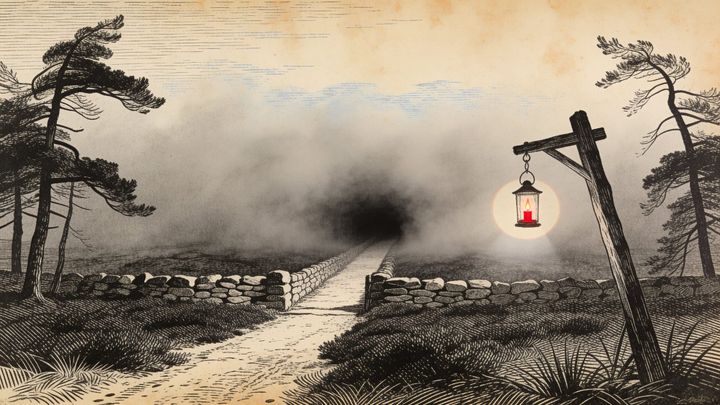
Robert Frost wrote about a neighbor who wanted a wall mended, and about wondering what he was walling in or walling out. A church that posts a warning at its door is asking the same question under worse conditions. As I read it, the church wants to keep out the person who would turn a visitor into evidence, not the visitor.
There is an old line in the psalms: "I had rather be a doorkeeper in the house of my God." (Psalm 84:10, KJV.) For most of my life I took that as a metaphor for humility. In Dhamtari a pastor now has to decide, at every service, who counts as a member and who counts as a risk, and the doorkeeper's job is no longer metaphor. Nobody ordered it, as far as we could find. The churches did it themselves.
What we cannot confirm: whether any charge has been filed against a Dhamtari church since the law took effect, and whether the state considers the notices lawful. We found no response from the state government.
Here is what I cannot stop turning over. More than a thousand people put their names to a statement that they were in the pews of their own free will. That is a strange kind of testimony. It is the opposite of what the law assumes about them, and they signed it anyway. The book of Revelation records Christ saying, "I have set before thee an open door, and no man can shut it." (Revelation 3:8, KJV.) The door in Dhamtari still opens. The sign beside it only tells you what it may cost to walk through.
Pray for the congregations of Dhamtari, and for the pastors who now stand at the door. If this reading was worth having, send it to one person who has never read a church sign and wondered what it was protecting.


Comments ()