Pew Found American Religion Has Stopped Falling. It Did Not Find the Revival I Kept Sharing.
Pew's October 28 report found American religion has held steady since 2020, with a surprising rise among the youngest adults and no clear sign of revival. A level stretch of road is harder news than a headline, because it means the next move is still ours.
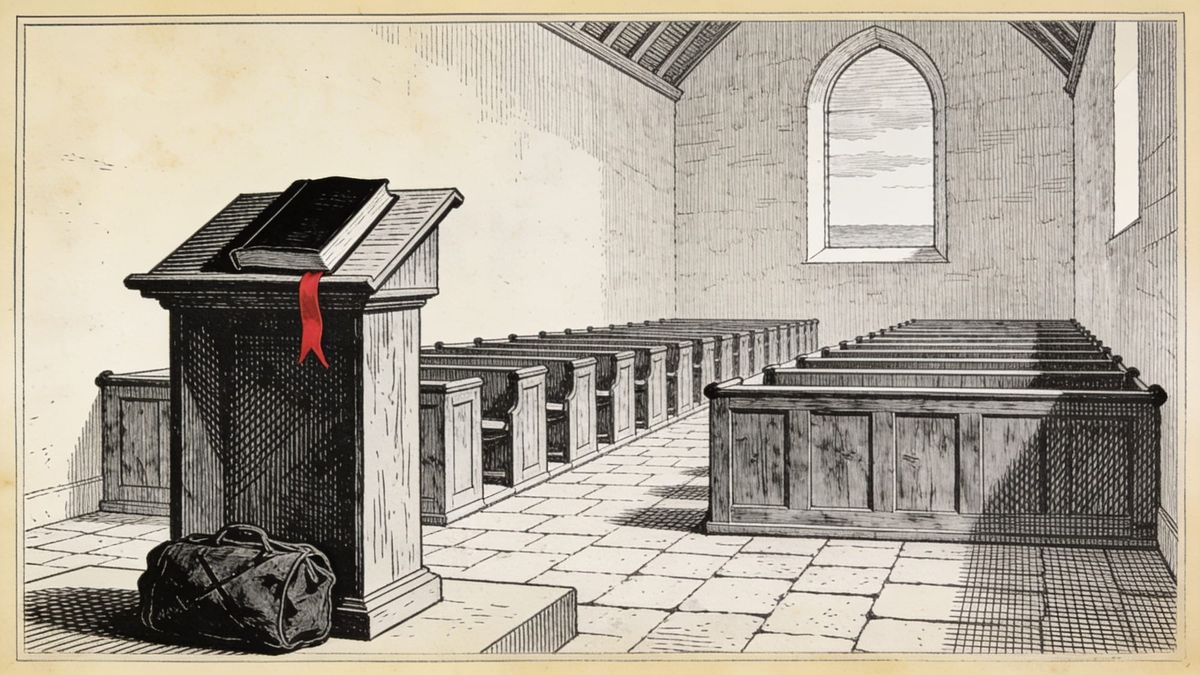
I have shared the revival headlines. A story about young men filling church pews, passed along with a line of my own that was mostly relief.
On October 28 Pew Research Center published the numbers I had been waiting for. They were not the numbers I had been forwarding.
Seventy percent of American adults identify with a religion. Forty seven percent pray daily. Forty four percent say religion is very important to them. Thirty four percent attend services at least monthly. In 2020 those figures were 71, 48, 45 and 33.
Flat. Not falling. Not rising either.
Pew's own sentence is careful: "After a prolonged decline, religion in the United States has shown signs of strength and stability in recent years." The report also says it found no clear evidence that any birth cohort it can track over time has become more religious.
There is one surprise in it. Adults born from 2004 to 2008, now about eighteen to twenty two, attend at least monthly at 41 percent, higher than the public. Young men in that group attend more than young women, 47 percent to 35. Pew says of that pattern: "This is something we have not seen before in our surveys." The adults just older, born 2000 to 2003, attend at 27 percent, among the lowest of any age group. Pew says it is too early to know whether the youngest group's numbers are a lasting change or a bump.
Ryan Burge, a political scientist at Washington University in St. Louis who studies American religion, put it more bluntly to The National News Desk: "Any talk of religious revival just doesn't have any data to back it up." We have, he said, "kind of hit a stasis point."
A stasis point. I read that twice, because it sounded less like a statistic than a diagnosis.
There is a scene in Acts I return to whenever I want a revival on my own schedule. The disciples, forty days after the resurrection, ask Jesus whether this is the time he will restore the kingdom. He tells them it is not for them to know the times or seasons. Then he gives them a job instead of a date: you will be my witnesses, in Jerusalem, and Judea, and Samaria, and to the end of the earth.
They wanted a headline. He gave them a street address.
I think that is why the revival stories travel so well among people like me. A revival is something that happens to the culture. It asks nothing of me but to share the link. A plateau is harder news, because a plateau means the next move is still somebody's to make, and the somebody is usually local: a pastor learning the names of the eighteen year olds who did come, a family that keeps a seat for the twenty five year old who stopped.
The young men in Pew's numbers are real people. So are the twenty five year olds who are not in a pew this Sunday. Neither group is a trend line. Each is a person someone could call.
None of this means the Spirit is bound by survey response rates. Pew's response rate for its main survey was thirty percent, and no survey has ever measured a soul. But I do not need data to tell me God is at work. I need it to tell me the truth about whether I am.
So here is what I am trying instead of forwarding the next headline. I am asking who in my own church is eighteen, and who is twenty five and gone, and whether I know a single one of their names.
A stasis point is not a verdict. It is a level stretch of road. Witnesses walk on those too.
If this piece helped you think, pass it to someone who has been forwarding the revival stories with you. We write one every few days. They are free.
Sources
- Pew Research Center, "Religion remains stable in the U.S., with mixed signals for young adults," October 28, 2026: https://www.pewresearch.org/religion/2026/10/28/religion-remains-stable-in-the-us-with-mixed-signals-for-young-adults/
- The National News Desk (CNY Central), Cory Smith, "Religion's long decline has paused, but expert doesn't see a revival in the data," November 2, 2026: https://cnycentral.com/news/nation-world/religions-long-decline-has-paused-but-expert-doesnt-see-a-revival-in-the-data
- Acts 1:6 to 8

Comments ()