
Psalm 88 Ends on the Word Darkness. Israel Sang It Anyway and Kept It in the Book.
Most laments climb out of the pit by the middle. Psalm 88 never does, and Israel handed it to the choir anyway. A reflection on praying when you cannot see a way out, for the believers on the long night.
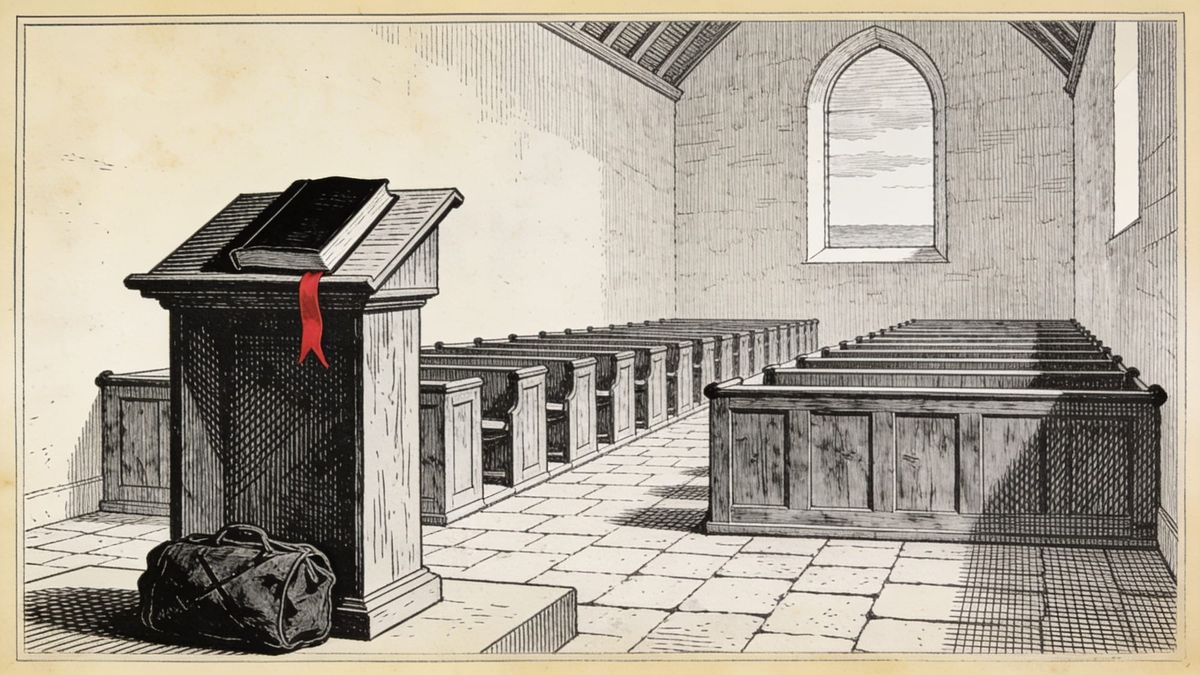
I keep a Bible reading plan on my phone, and it has a quiet habit I have never questioned. When it reaches certain psalms, I read faster. Psalm 88 is one of them. I have skimmed it every year I can remember, the way you walk a little quicker past a house where something bad happened.
It is the only psalm I know that never turns. Most laments climb out of the pit somewhere around the middle. "But I have trusted in thy mercy." "For I shall yet praise him." Psalm 88 goes down and stays down. Its last line, in the King James, is this: "Lover and friend hast thou put far from me, and mine acquaintance into darkness."
That is where it ends. The word darkness is the last thing on the page.
A Song for the Choir
What unsettles me most is not the despair. It is the heading. The superscription calls it "A Song or Psalm for the sons of Korah, to the chief Musician," a maschil of Heman the Ezrahite. Someone wrote it down. Someone handed it to the choir director. Israel sang this in public worship, with no happy ending, and kept it in the book.
I would have cut it. I would have asked the songwriter to add a bridge. If a Sunday ever ended on the word darkness, half of us would assume the projector had frozen.
The editors of the Psalter apparently believed there are nights when the honest prayer has no resolution in it yet, and that God would rather hear that prayer than a cheerful one we do not mean.
Cried Day and Night
Read it slowly and something else surfaces. The man who wrote it never stops talking to God. The first line is an address: "O Lord God of my salvation, I have cried day and night before thee." Halfway through he is still at it: "But unto thee have I cried, O Lord; and in the morning shall my prayer prevent thee." He gets up before dawn to pray a prayer that he does not expect to change his circumstances.
He calls God the God of his salvation, at the top of a psalm in which he cannot see any salvation at all. That is not despair. Despair stops praying. This is something harder and stranger: faith with nothing left to hold but the address.
The People on the Long Night
Every morning this publication carries news from places where Psalm 88 is not a text to be skimmed. A family burying a son of fifteen. A pastor in a cell waiting on a court that keeps adjourning. A village counting the people who did not come back. I read those dispatches, and then I go to my reading plan and I hurry past the one psalm written for them.
Maybe that is why I skim it. It refuses to let me feel better on their behalf. It will not pretend the night is shorter than it is.
And yet the psalm is in the book, which means the night is in the book, which means God has made room in his own Scripture for the prayer of someone who cannot see him. That is a strange mercy. It means the persecuted believer who can only manage "I have cried day and night before thee" is not praying below the standard. She is praying a psalm.
A Small Practice
Here is what I am trying this week. When I come to the end of the Morning Watch, I read Psalm 88 aloud, all eighteen verses, slowly, without adding anything to the end. I let it finish where it finishes. Then I name one person from that morning's news, and I say the first line for them: O Lord God of my salvation.
If you would like to keep that watch with us, the Morning Watch comes each day at six.
I used to think the psalm ended in darkness. I am starting to read it the other way around. It begins with the God of my salvation, and it never takes the words back.
Sources
- Psalm 88, King James Version: biblegateway.com
- Psalm 13 and Psalm 42, King James Version, for the turn in other laments: biblegateway.com
Comments ()