
The Canadian Forces Did Not Cut the Prayer. They Wrote Something to Put in Its Place.
The headlines say prayer ban. The instruction says something stranger. It does not delete the prayer at Remembrance Day. It prescribes a replacement, and defines it in a sentence that abbreviates the name of God.
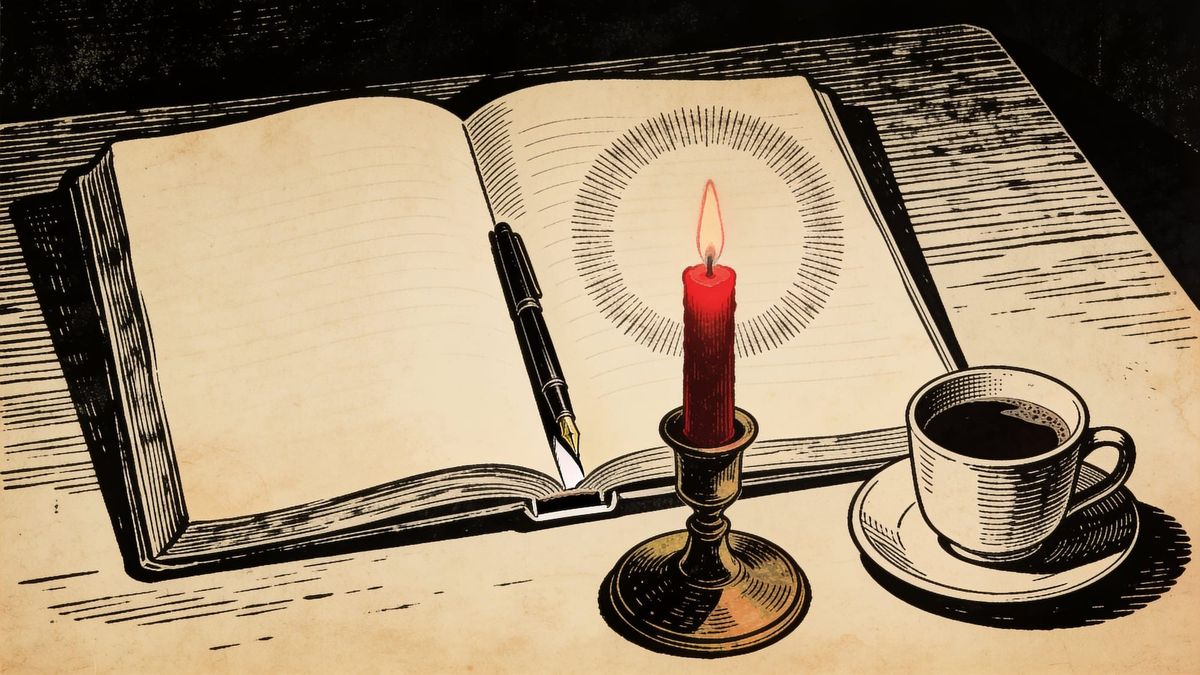
I have stood through a lot of invocations. I have listened to maybe four of them.
The rest I spent doing arithmetic on the program or thinking about the parking. Somebody at a microphone asked God to bless the assembled, the assembled looked at their shoes, and afterward we all agreed it had been a nice service. I have been a body in a folding chair at the exact kind of ceremony now at issue in Canada, and I was not praying.
So when I read that the Canadian Armed Forces had banned prayer at official ceremonies, my first honest reaction was not outrage. It was closer to a shrug, and I want that on the record before I say anything else.
Then I read the document.
The two words that changed my mind
Canadian Armed Forces Military Personnel Instruction 03/26 is titled Spiritual Reflections in Military Settings. It was issued July 29 and it applies to every member of the Forces, plus the department’s employees, contractors, students and volunteers who provide spiritual or religious services. It supersedes a 2023 directive that covered chaplains alone.
Here is the definition, verbatim. A spiritual reflection is an inclusive public address that nurtures resilience “by fostering meaning, purpose, and spiritual well-being.” And then the note: “Spiritual reflections do not use religious specific language, including references to God, etc.”
Etc.
A government wrote a formal instruction about the spiritual life of the people it sends to die, and when it arrived at the name, it abbreviated. Not out of malice. Out of the sincere administrative conviction that the name belongs to a category, that the category has other members, and that listing them would be tedious.
That is the whole thing, right there, in three letters.
What the document actually does, fairly stated
It does not abolish prayer, and anyone telling you it does has not read it. Funerals are exempt outright, described as family led ceremonies where chaplains may pray and officiate. Private counselling, weekly worship, faith specific gatherings, religious rites, milestone ceremonies, all untouched. Chaplains are, in the instruction’s own words, expressly mandated to offer prayer and counsel and ritual support from their own traditions.
What changes is the microphone at the mandatory event. Graduation parades. Change of command. Ship commissionings. Mess dinners. Remembrance Day. At those, where attendance is expected and a prayer has been requested, the chaplain must offer a spiritual reflection instead. The department told Canadian Catholic News the aim is for ceremonial moments to bring people together regardless of belief. The policy leans on the Supreme Court of Canada’s 2015 Saguenay ruling on the state’s duty of religious neutrality. Humanist groups applauded it. I do not think the people who drafted it were setting a trap.
There is one seam. Indigenous practices, the instruction says, “some of which contain spiritual elements,” may be included when they are relevant and framed in a cultural and educational context, because of Canada’s constitutional recognition of Indigenous rights and its commitment to reconciliation. I understand the reasoning and I am not going to pretend the histories are interchangeable. But the state has now sorted spiritual speech into two bins, and it is doing the sorting.
The altar with nothing written on it
Paul walks into Athens and the city is full of gods, and he finds one altar with no name on it at all. To an unknown god. He does not smash it. He preaches from it. Whom therefore ye ignorantly worship, him declare I unto you.
That altar is the most religiously inclusive object in the ancient world. It is infrastructure for reverence in general, addressed carefully to nobody. It is also the thing Paul treats as an open question rather than an answer, which is why his sermon is not a scold.
Instruction 03/26 has built one of those. Gratitude, remembrance, hope, integrity, meaning, purpose, spiritual well-being, all real words for real things, all pointed at no one in particular. A pause, the instruction suggests, in which members may pray privately “in keeping with their individual understanding of God or transcendence.”
Bishop Scott McCaig of Canada’s military ordinariate has made the objection plainly. For many people, chaplains and members alike, you cannot separate meaning and purpose and spiritual well-being from God, and the instruction requires exactly that separation. His office and the interfaith committee are drafting a response and taking their time over it. “There’s a lot at stake,” he said, and he is not wrong about the stakes even if he loses the argument.
What I owe the argument
Here is the part that costs me something.
My folding chair invocations were already spiritual reflections. Somebody said the name and I did not hear it and nothing in me moved, and if the microphone had said gratitude and remembrance instead I would not have noticed the substitution. The policy did not empty those ceremonies. It found them empty and wrote it down.
I do not think that makes the policy right. I think it makes the objection harder and better. The reason to want the name spoken at the parade square is not that it works on the crowd, because manifestly it often does not. It is that a country which cannot say it in public has quietly agreed about something, and the agreement will outlast the ceremony.
An altar to an unknown god is not the worst thing a state can build. It is honest about its own uncertainty, which is more than most states manage. But somebody has to stand up next to it and say whose it is. That was Paul’s whole move. The altar was not the problem. The silence around it was the opportunity.
If this piece was worth your morning, forward it to one person. That is how the free ones travel.
Sources
- Government of Canada, National Defence, Canadian Armed Forces Military Personnel Instruction 03/26, “Spiritual reflections in military settings,” issued July 29, 2026 (primary text). Link
- Paul Schratz, Canadian Catholic News, “Canadian Armed Forces doubles down on prayer ban, faith leaders prepare response,” The Catholic Register, August 4, 2026. Link
- Paul Schratz, Canadian Catholic News, “Military bishop questions consultation on chaplain prayer policy,” The Catholic Register, August 6, 2026. Link
- Christianity Today, “Canadian Military Chaplains Can’t Mention God in Public,” August 2026. Link
- BC Humanist Association, statement welcoming the instruction. Link
- Acts 17:23, King James Version.
Verification note. Every quotation from the instruction is taken from the primary text on canada.ca, not from secondary reporting. The direct McCaig quotation used here is from his August 4 interview with Canadian Catholic News. A widely circulated McCaig statement of August 10 was not confirmed against an approved source this run, so his objection is paraphrased rather than quoted. The Christianity Today piece is cited as coverage; no claim above rests on it.
Comments ()