
She Appealed Her Conviction to Europe's Highest Court. Then a Democracy Refused to Let Her In.
Strip the case to its facts and it is hard to believe the facts.
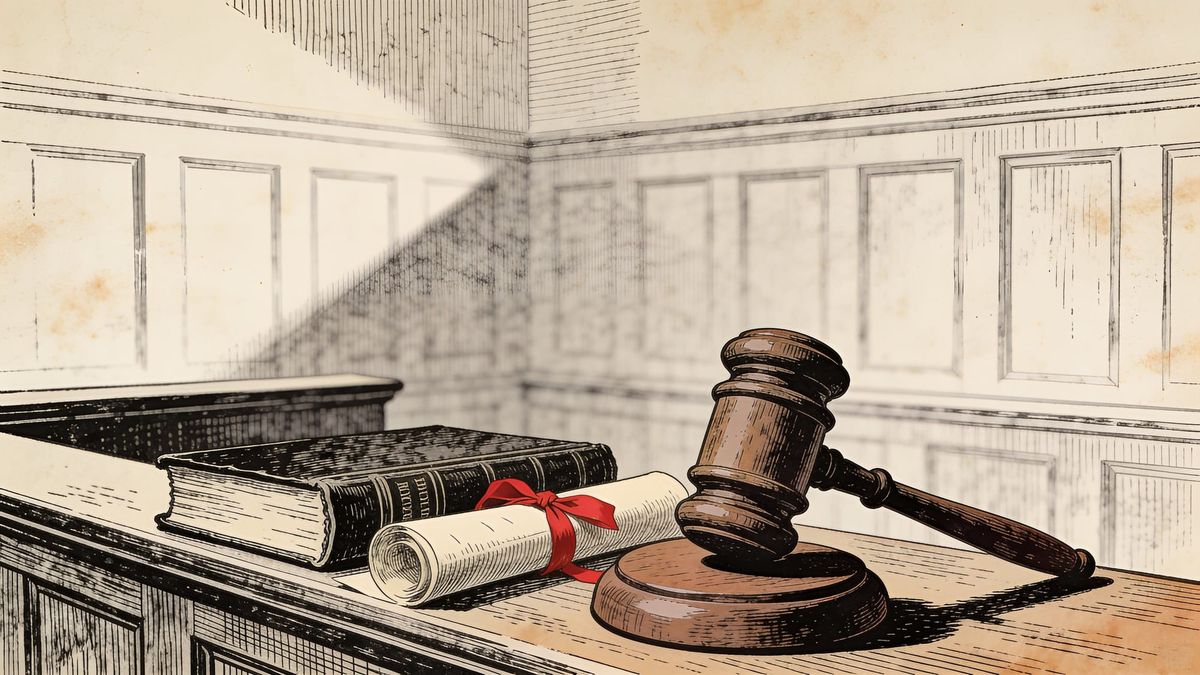
Päivi Räsänen is a Finnish member of parliament, a physician, a former interior minister, and a grandmother of twelve. In 2004 she wrote a booklet for her church on marriage and sexual ethics. In March of this year, Finland's Supreme Court convicted her over that booklet, by three votes to two, under a statute titled "ethnic agitation." The fine was 1,800 euros. The court also ordered the offending passages "removed from public access and destroyed."
This week she filed her appeal with the European Court of Human Rights in Strasbourg. Her submission, according to Finnish press reports, runs to 610 pages.
And in the same month she filed it, the United Kingdom cancelled her travel authorization. Because of the conviction, a sitting parliamentarian of a friendly democracy cannot transit Heathrow, and may be barred from giving a keynote at a religious freedom conference in Belfast in August. The subject of her planned speech was free speech.
Begin with what the Finnish courts actually held, because precision is owed even to rulings one opposes. Two lower courts acquitted Räsänen unanimously, in 2022 and 2023. The state prosecutor appealed twice. The Supreme Court then unanimously acquitted her on one charge, a 2019 post that pictured Romans 1:24 to 27, and convicted her on the booklet, finding that passages describing homosexuality as a developmental disorder insulted homosexual people as a group. The court conceded the booklet "did not contain incitement to violence or comparable threat-like fomenting of hatred." Lutheran Bishop Juhana Pohjola and the Luther Foundation, which published the booklet, were convicted alongside her. Both are appealing too.
Concede the fair point first. Räsänen's language about homosexuality is language many people, including many Christians, find wounding, and those who feel demeaned by it have a real grievance worth taking seriously. A court, however, is not a referee of wounded feelings. The question before Strasbourg is not whether the booklet was kind. It is whether a European state may criminally punish the peaceful expression of a religious conviction, two decades after the fact, under a law passed years after the writing.
The European Court's own precedent says freedom of expression protects ideas that "offend, shock or disturb." That is not a loophole. It is the design. Speech that offends no one needs no protection, which is why a right calibrated to the inoffensive is no right at all.
Now the UK decision, which turns a Finnish case into everyone's case. Räsänen applied for an Electronic Travel Authorisation. It was approved in June, then cancelled in July, on account of her criminal conviction. Bishop Pohjola was denied as well. Follow the mechanism: a conviction that two Finnish courts said should never have happened now operates as a border fact in a second country, excluding a speaker from a conference about the very freedom at issue. Punishments compound across borders even when the underlying judgment is still under appeal. If the conviction falls in Strasbourg, no one will refund her the rooms she was barred from speaking in.
Here is the pluralist test, and it cuts both ways. If you cheer this conviction, imagine the statute in other hands: a government that deems your view of marriage, or your criticism of a religion, an insult to a protected group. And if you defend Räsänen, you are committed to defending the imam, the atheist, and the progressive pastor when their peaceful convictions land them in the dock. The liberty she claims must shield the person she disagrees with, or it shields no one.
For American readers, this is not a spectator sport. Räsänen testified before Congress in February that European censorship is a worldwide concern. She is right, and the traffic moves in both directions. Speech rules written for one continent become templates for another, and the habit of punishing conviction as insult does not respect coastlines.
The European Court will first decide whether to admit the case at all. That decision alone will signal how much room Europe intends to leave for religious speech. We will read every page of what follows, including the 610 she just filed.
If this piece was useful, share it. It is free precisely so it can travel farther than she currently can. And if you want the full anatomy of the case when Strasbourg acts, that work is what membership pays for.
Sources
- "Päivi Räsänen appeals conviction to European court," Helsinki Times, July 25, 2026: https://www.helsinkitimes.fi/finland/finland-news/politics/29090-paeivi-raesaenen-appeals-conviction-to-european-court.html
- "Finnish Parliamentarian Convicted under 'Hate Speech' Law Files Appeal to European Court of Human Rights," ADF International (party counsel; treat framing as advocacy), July 24, 2026: https://adfinternational.org/news/finnish-parliamentarian-files-appeal-to-european-court-of-human-rights/
- "UK blocks travel authorisation for Finnish MP Päivi Räsänen," Helsinki Times: https://www.helsinkitimes.fi/world-int/29041-uk-blocks-travel-authorisation-for-finnish-mp-paeivi-raesaenen.html
- "Supreme Court convicts MP Päivi Räsänen over hate speech," Helsinki Times, March 2026: https://www.helsinkitimes.fi/finland/finland-news/domestic/28665-supreme-court-convicts-mp-paeivi-raesaenen-over-hate-speech.html
- Christianity Today, "Finland’s Top Court Split on Christian Politician’s Hate Speech Charges," March 2026 (confirms the acquitted post pictured Romans 1:24 to 27): https://www.christianitytoday.com/2026/03/finnish-parlimentarian-paivi-rasanen-christian-hate-speech/

Comments ()