
They Were Attacked at Prayer. Then Egypt Arrested Them.
The stones came first. Then the handcuffs.
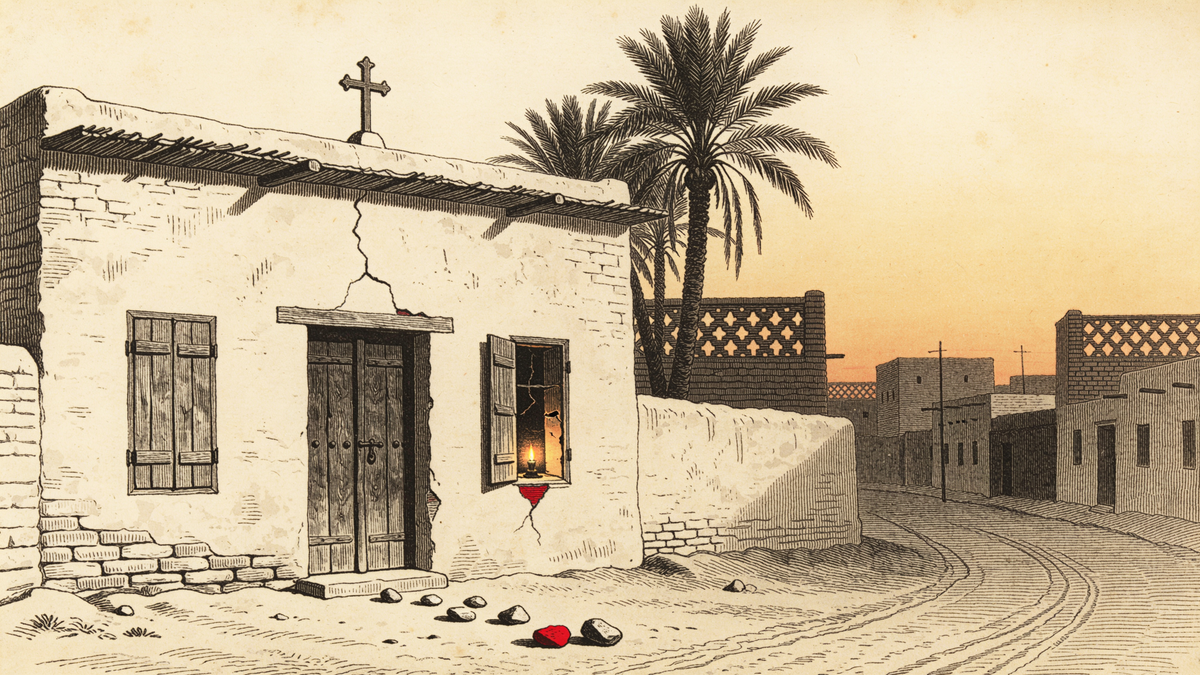
On the evening of July 8, in the village of El-Tal El-Qibliya in Egypt's Minya Province, dozens of residents surrounded the building where the village's Coptic Christians pray. They threw stones at the church doors. They threw stones at the windows of Christian homes. They damaged the parish priest's car. Witnesses reported the crowd chanting sectarian slogans as the stones flew.
Several Christians were injured. The Egyptian Initiative for Personal Rights, a Cairo-based rights group that investigated the attack, described the injuries as minor. Christian Solidarity Worldwide, working from the same reporting, said several believers were hurt and the building damaged.
Then the police arrived, and they arrested four of the Christians.
Their names are Issa Zakaria, Maged Zakaria, Bibawi Saad, and Amir Makram.
They were held alongside an unspecified number of Muslim residents picked up over the same incident. According to CSW, the four men were released two days later, on July 10, on one condition. They had to withdraw their complaints against the people who attacked them. EIPR's account says the release came the following day. The two organizations agree on the condition. The men signed away their case, and the doors opened.
That is the whole transaction. Drop the charges against the mob, and you can go home.
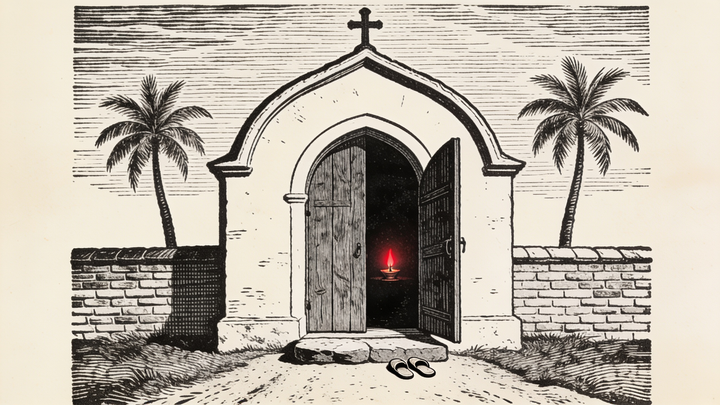
El-Tal El-Qibliya had no church at all for more than twenty years. The village's Christians eventually set aside an ordinary building for prayers and masses. They did it openly. EIPR reports that both the security authorities and the village's Muslim residents knew the building was being used for worship. Egypt's 2016 church construction law was supposed to give buildings like this one a path to legal status. The application has gone nowhere, which is common. Thousands of churches across Egypt still wait in the same line.
The spark on July 8 was small. EIPR traced it to a quarrel between a police officer and a Christian resident over a church supply truck parked in front of the officer's home. Words became blows. Then the crowd gathered, many of them women and teenagers, and turned on the church.
The parish priest, Fr. Pavlos Kamal, had seen it coming. He had already notified security officials about incitement and harassment directed at the congregation during services. CSW reports that no preventive action was taken.
"The fact that four victims of violence were detained and were only released upon withdrawing their complaint against their assailants is a lamentable indication of an abiding inequality before the law," said Mervyn Thomas, CSW's founder president.
EIPR is asking the government for four things: legalize the village church, prosecute the attackers, amend the 2016 church construction law, and issue a decree legalizing the churches whose applications are still pending.
What cannot be confirmed matters too. Neither organization has published the number of Muslim residents arrested, and no charges against any attacker have been announced. Whether the withdrawn complaints can ever be revived is not clear. We will say so plainly if that changes.
This is the pattern the watchdogs have documented in Upper Egypt for years. A mob forms. The police arrive late. The victims are arrested with their attackers, and reconciliation is extracted at the station house, where the price of freedom is the case itself. The attackers walk. The ledger closes. The next mob knows the price.
Four men prayed in a building their village had waited twenty years for, and it cost them a night in custody and their day in court.
Pray for Issa, Maged, Bibawi, and Amir, and for Fr. Pavlos Kamal, who warned the authorities and was not heard. Pray for the congregation of El-Tal El-Qibliya, that they would keep their building and their nerve. And take one concrete step: share this story with your church's prayer list this week, with the four names spelled out. The station-house bargain depends on nobody outside the village ever learning it happened.

Comments ()